Are AI Photos Allowed on Dating Apps? An Honest Answer
This is the question people quietly type before they try an AI photo tool, and most articles answering it are either scare pieces or sales pitches. Here is the honest version, from a company that makes these tools and still wants you to use them the right way.
The short answer: there is no rule against AI-assisted photos on the major apps, but there is a firm rule against misrepresenting who you are. The tool is not the issue. Honesty is. Once you understand where that line actually sits, the whole question gets simple.
What the apps actually prohibit
Read the community guidelines for Tinder, Hinge, Bumble, and the rest, and you will not find "no AI photos." What you will find, in every single one, is a prohibition on impersonation, deception, and misrepresenting your identity. That is the rule that matters, and it long predates AI. It is the same rule that bans using a model's photos, a ten-years-younger photo, or someone else's face.
So the app is not asking "was AI involved." It is asking "does this photo accurately represent the person behind the profile." That reframing is the whole thing. An AI photo can pass that test easily, or fail it badly, depending entirely on what you do with it.
The line: representation, not method
Picture two photos made with the exact same tool.
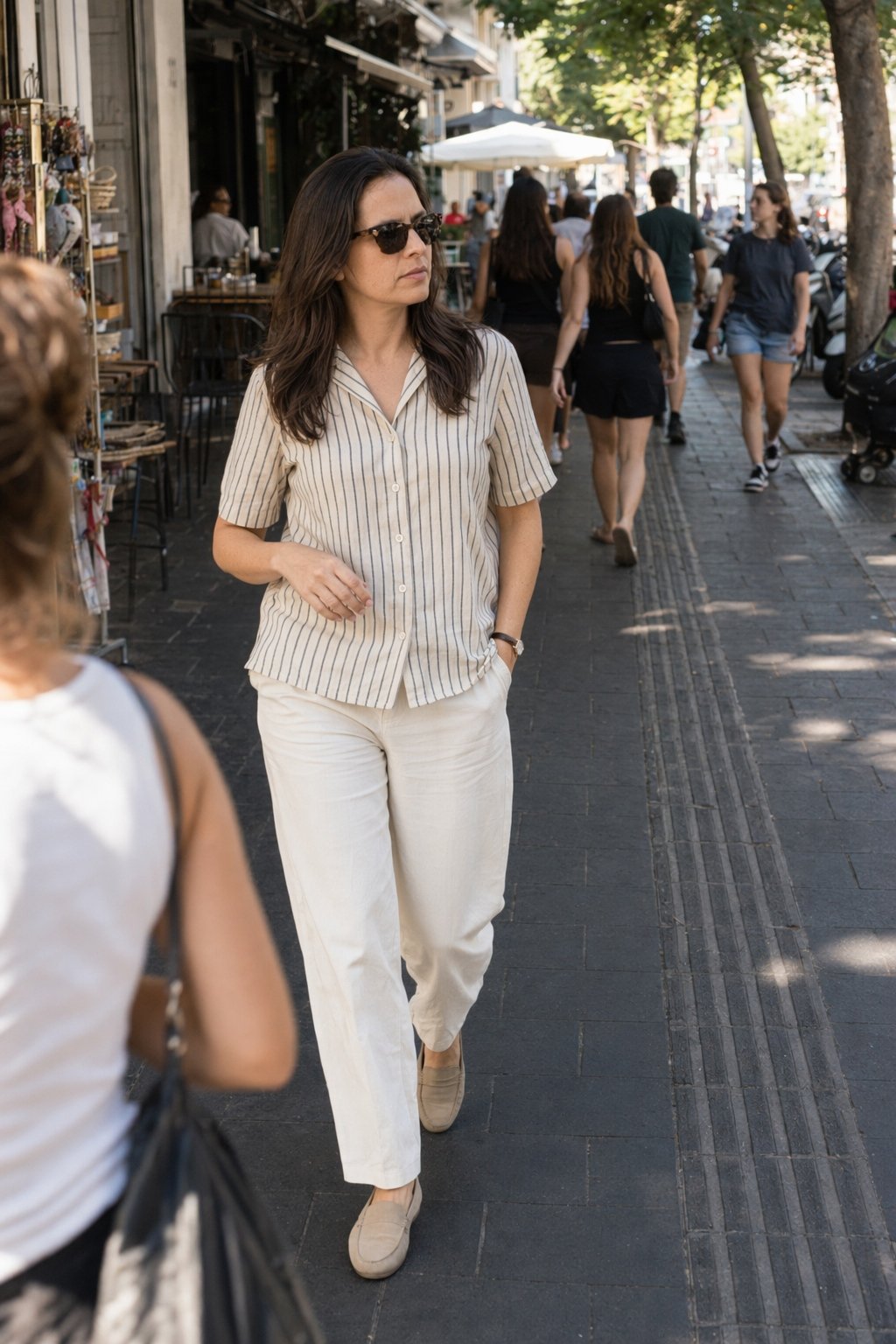
The first takes your real face, your real build, and your real current age, and places you in better light, in a setting you would actually be in, smiling the way you actually smile. A friend would say "nice photo of you." A match would recognize you instantly at the bar. This photo is fine. It represents you. It is doing the same job a good photographer would do.
The second changes your jaw, slims your body, erases fifteen years, and hands you a face that is almost but not quite yours. A match would feel a small jolt of "wait, is that him" when you walk in. This photo is a problem, not because AI made it, but because it misrepresents you. It would be equally against the rules if a very aggressive Photoshop artist had done it by hand.
Same tool. Opposite outcomes. The method was never the question.
What actually gets you reported
Bans rarely come from an algorithm detecting "AI." They come from people. A match feels deceived when you show up looking different from your photos, and they report or unmatch. That is the real enforcement mechanism, and it is triggered by the gap between the photo and the person, not by the technology.
Which means the safe test is not "will an AI detector flag this." It is "would my date feel deceived when they meet me." If the honest answer is no, if you look like your photos, you are on the right side of both the written rules and the unwritten one that actually matters.
How to stay clearly on the safe side
The rules reward the same thing good dating advice always has: look like the best real version of yourself.
- Preserve your real face and proportions. Use a tool that keeps your actual features, not one that idealizes them into someone else.
- Keep your current age. A photo of the you from a decade ago is a misrepresentation whether a camera or a model made it.
- Generate realistic settings, not fantasy ones. Better light and more variety, not a life you do not live.
- Apply the recognition test. If a friend would say "that's so you," and a date would recognize you at a glance, you are fine.
This is exactly why likeness-preserving tools exist. CMeIn is built to keep your real face, features, and proportions and simply place the real you in well-lit, varied, candid settings, the same thing a good photographer does in an afternoon. Used that way, an AI photo is not a rule you are bending. It is just a better photo of you, and every app allows that.