The Evidence Text: What to Send After You Got Her Number
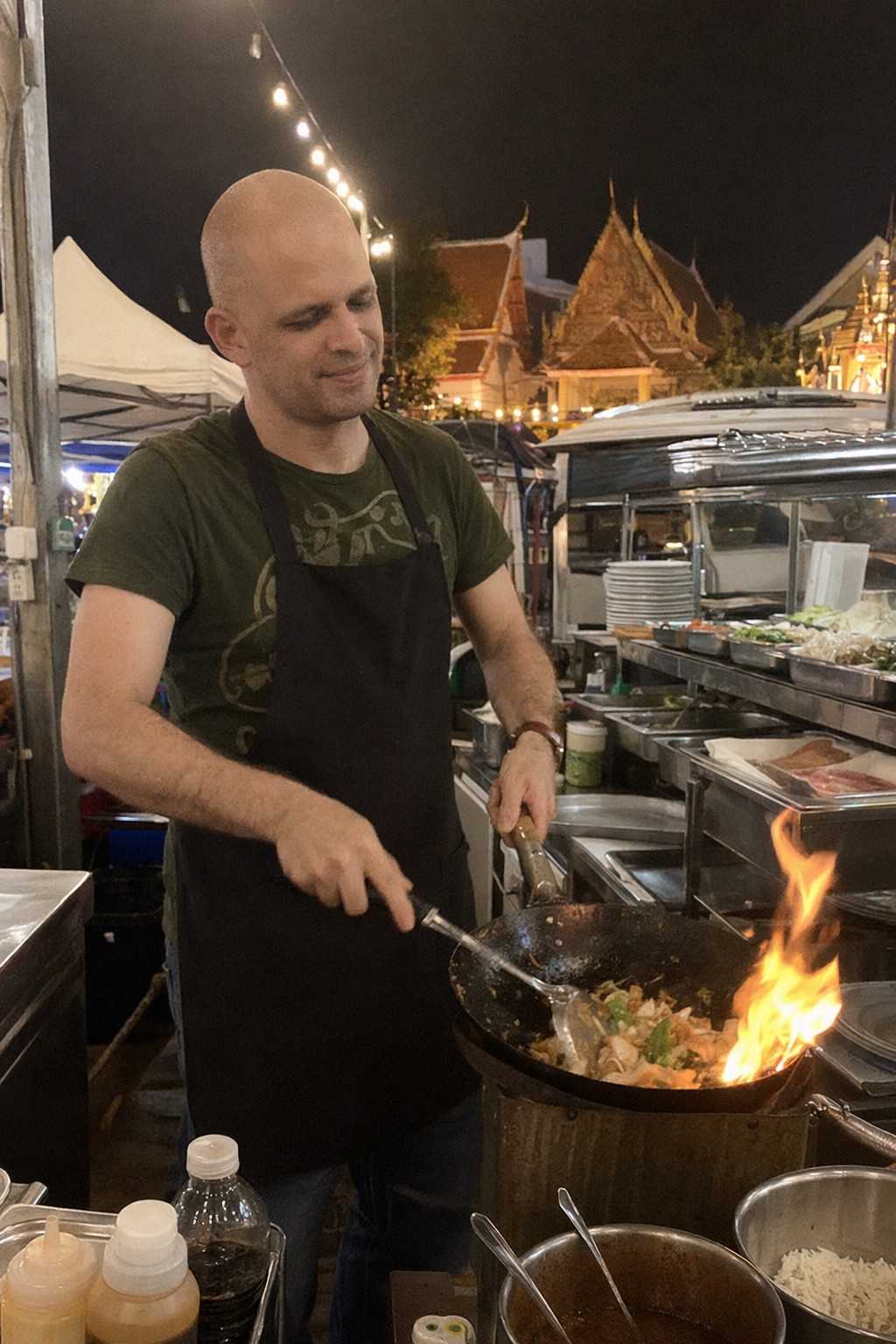
You met her at a party. Something worked: a running joke, a mock argument, a nickname she invented for you on the spot. She put her number in your phone. And now you're staring at the empty message box, about to type the sentence that kills more post-party chemistry than anything else ever written:
"Hey, it's Mike from Saturday :)"
Delete it. Here's what to send instead, shown through one real Tuesday: a guy saved in her phone as "Mike the Improviser," a waitress who calls herself "the Legal Department," an open bet about fried rice, and a first message that never says hello. The party where all of this started is its own chapter; this is what happened after.
Don't reintroduce yourself. Re-enter the scene.
The party had ended on a case: her accusation, on the record, that he's "the type who makes one stir-fry and posts a story like he's a chef." His counter-claim. An agreed discovery date: Tuesday, photographic evidence.
So Tuesday at 1 PM, the first text wasn't "hey, what's up." It was:
Him: Counselor Nora — argument #1 for a plea bargain [photo: the full spread — galangal, curry paste, fish sauce, chicken, scallions, MSG in plain view]
Three minutes later: "Wait. Using the degree I abandoned against me. The audacity. I'm in." Followed, unprompted, by a full court record: exhibit numbering, cross-examination, and a ruling that an ingredients photo is insufficient, she demands footage from the wok itself, with his hand in frame, by sunset.
Look at what that opener did. It didn't remind her who he was; it handed her a role in a game they already owned. She's the court, he's the defendant. People don't abandon a role handed to them with respect; they inhabit it. And notice her counter-move: she set his next deadline. When the other side schedules your next message, they've subscribed to the conversation.
Show, don't claim
Here's the law under the whole scene. "I actually cook" is a claim, and any impostor can type a claim. A photo of galangal and fish sauce is testimony. In text you have no tone, no timing, no eye contact; images do the job your presence did in person.
And the detail that made the photo believable wasn't the fancy ingredients. It was the MSG sitting in plain view. Someone staging proof hides the unflattering detail; someone real doesn't think to. Her verdict, verbatim: "MSG in the open, no shame, either you actually cook or you have nothing left to lose." The imperfection is the authenticity.
At 4:48, an hour before her deadline, came the second exhibit: a propped-phone video, oil, rice, the wok tilted until the flame catches, twice. The caption was four words: "Argument #2. Blazing hot."
That's the other half of the law: let the evidence speak. No explanations, no "look what I can do." Whoever explains their proof sounds like someone who needs to. He submitted and shut up, and she did the narrating for him, connecting his wok technique to a backstory from the party night, weaving his mythology herself. When she's building your canon, you're not a guy from a party anymore. You're a character with a plot.
The gap she names is the close, handed over
Then she sent the sentence the whole day had been building toward:
"A photo can be stolen. A video can be staged. But the central piece of evidence in this case cannot be submitted over WhatsApp. Taste does not travel over fiber optics. The court wonders how exactly you intend to solve that."
Read it twice, because this is the moment most men miss. She built the date. She named the one thing that can't happen by phone and asked how he plans to solve it. Your entire job at this point is to phrase it, and phrasing it is done with a statement, not a question:
Him: So — the plea deal: tonight, 8 PM, [address]. Come without heels.
Same-day, defined to the floor number, zero question marks. And those last three words were the play of the night: a callback to the very first line he'd said to her at the party. She caught it instantly, "you remember the first sentence you ever said to me", because a callback to the moment you met doesn't read as technique. It reads as fate.
Could same-day have been too fast? On a cold open, yes. Here, the whole day had been a runway: exhibit one, cross-examination, exhibit two, her own sunset deadline. Momentum built across hours makes "tonight, 8 PM" a conclusion, not a leap.
Her conditions are the yes
Her acceptance came with amendments: she's bringing wine ("not sweet, I have a bartender I refuse to disappoint"), a void-clause if the rice doesn't match the video, and one more item worth its own paragraph:
"I sent Josh the address. If I disappear, he knows where to look."
If you've never understood this moment, learn it here: the safety clause is a green light, not an insult. A woman coming to the apartment of a man she met two days ago will always arrange a safety net, and the healthy ones say it out loud. It isn't distrust of you; it's protocol, and it's what makes coming possible. The only correct response is total normalcy. No defensiveness, no jokes about it.
And when she signed off in the inside-joke language born on night one, the contract was joint property. When she's adding her own terms, the answer was never in question.
The evidence-text rules, compressed
- Re-enter, don't reintroduce. The first text continues the scene from the party, in her currency, mid-game.
- Deliver on the promise, in character. If you said Tuesday, it happens Tuesday. Kept-word is the whole brand.
- Show, don't claim. Photos and videos are testimony; typed self-descriptions are noise.
- Leave the unflattering detail in. The MSG is what makes the evidence real.
- Serialize. "Argument #1" makes every later message pre-invited. Good threads have infrastructure.
- Let proof speak. Four-word captions. Explaining your evidence undermines it.
- When she names the gap, close it. A statement with a time, a place, and one playful condition.
- Save the first-line callback for the finish. It reads as fate.
- Treat her safety net as the green light it is.
One more thing, since this whole chapter was about photographic evidence beating claims: the same law runs your dating profile. Photos testify; bios assert. She believed the wok, not the caption, and strangers scrolling past your profile work exactly the same way.