AI Dating Photos: What They Can, and Can’t, Do
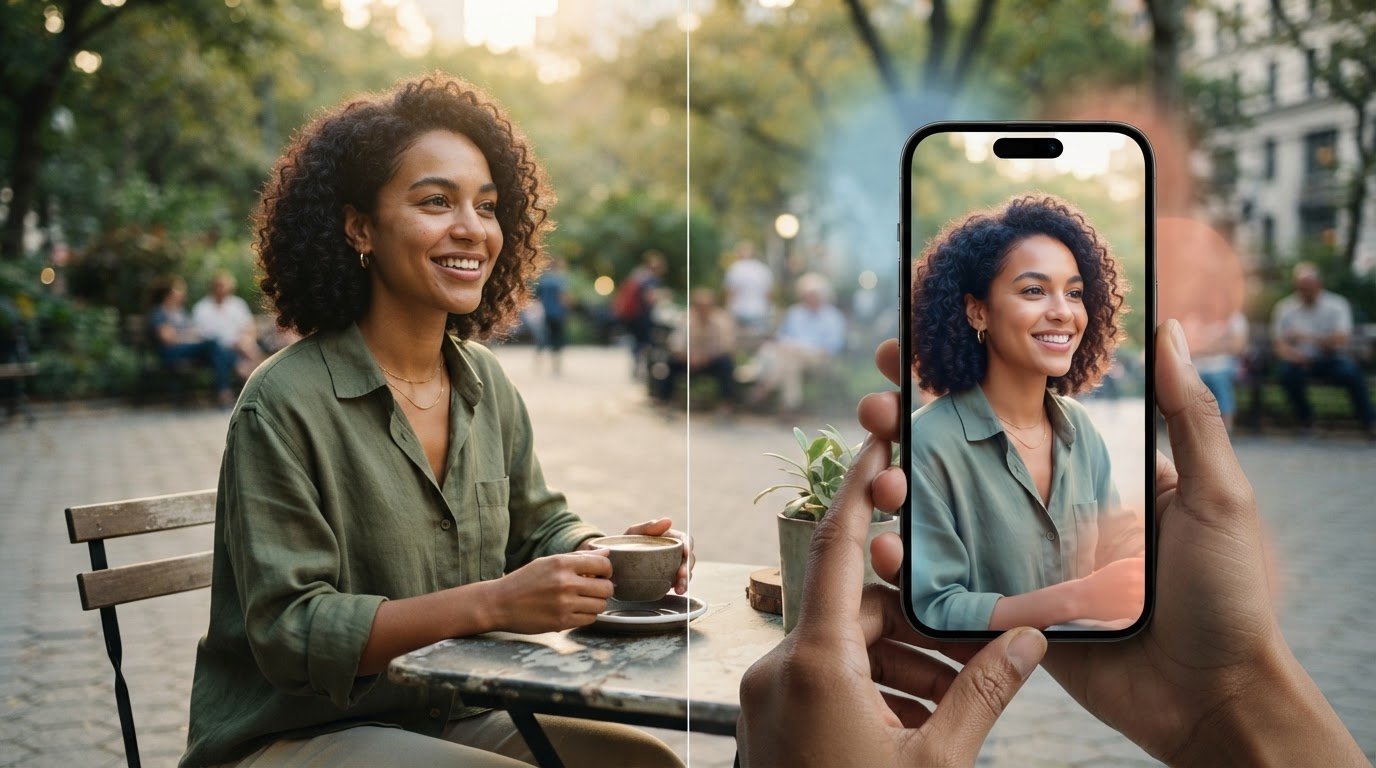
The best AI dating photos don’t make you look better by making you look like someone else. They improve the setting, lighting or overall polish while keeping your face and appearance recognisably yours. That distinction matters: a profile photo can look appealing on a screen and still create the wrong expectation when you meet.
If you’re unsure what AI-generated photos change, or whether dating apps allow them, look past the glossy examples. The useful question isn’t whether a photo looks perfect. It’s whether it still looks like you and fits the rest of your profile.
This guide explains what AI dating photos can and can’t change, how to judge whether a set feels believable, and what to know about Tinder, Hinge and Bumble’s approach to accurate representation. You’ll also find a practical way to decide whether a dating-focused service, such as CMeIn’s photos for dating apps, fits your needs. The goal is a stronger profile, not a different person.
Key Takeaways
- Learn how AI dating photos differ from camera images and what that means for your profile.
- Separate changes to presentation from changes that could give someone the wrong idea about your appearance.
- Compare AI-generated, self-taken and professional photos by convenience, setting, likeness and effort.
- Use simple checks to assess whether a photo looks like you, and review each app’s current photo rules.
- See how CMeIn’s dating-focused photos are tailored for Tinder, Bumble and Hinge.
Table of Contents
What Are AI Dating Photos and What Do They Do?
An ordinary portrait records a moment in front of a camera. An AI-generated dating image is created or changed with artificial intelligence, so it may show a person in a setting or presentation that wasn’t captured as-is. The difference isn’t simply how polished the picture looks. It’s how the image came to exist.
AI dating photos are AI-created or AI-altered profile pictures intended to present a recognisable person in a dating-app setting. Their practical purpose is to give someone profile-ready images, not to choose matches, write messages or determine compatibility.
How AI dating photos differ from ordinary portraits
A camera photo shows what was in front of the lens at the time. An AI image may be generated or altered, though the exact approach varies between services. For a general introduction to the underlying idea, see How AI Generates Images.
That makes the intended use important. AI art can illustrate an idea or invent a scene, while a dating profile image is meant to represent a real person. A picture can work as artwork yet feel out of place as a portrait if it doesn’t resemble the person it is meant to show.
What a dating-focused image is meant to communicate
A dating-focused image should give someone a credible first impression: this is a real person, shown in a way that feels at home on a dating profile. The setting or overall presentation may differ from a casual phone snapshot, but the person should remain recognisable. A polished image can’t tell viewers whether two people share values, humour or attraction.
It also isn’t the same thing as a professional headshot. A headshot is usually made for a work-related profile or other formal use. A dating image has a different context: it should feel personal and suitable for a profile rather than like a corporate portrait or an illustration. The label alone doesn’t make an image credible. Resemblance and the impression it creates matter more.
- General-purpose AI art: may focus on a concept, character or imagined scene.
- Professional headshot: is typically framed for work or formal presentation.
- Dating-focused image: is intended to show a recognisable person in a profile-ready context.
Think of the image as one part of a profile, not a substitute for the person behind it. Ask whether it helps someone imagine meeting you or creates an impression you’d have to explain away. That distinction separates a dating photo with thoughtful presentation from an image that works better as fiction.
What AI Can Change in Dating Photos, and What It Shouldn’t
AI can change how a profile image is presented. Depending on the image and service, the setting, lighting, clothing or overall look may differ from an ordinary camera portrait. Those changes can make a picture feel more considered, but they can also affect what viewers believe about the person in it.
The useful boundary isn’t “perfect” versus “imperfect.” It’s presentation versus identity. A different background may be harmless. A changed face or body that creates a false impression can set up an uncomfortable first meeting. AI can change a photo’s presentation, but it cannot verify a person’s character.
Likeness is the line between polished and misleading
A profile image should still look like the person someone will meet. If facial features, age or body shape appear noticeably different, a match may feel misled even if the image looks plausible on a screen. A simple sense check: would friends recognise you without needing an explanation?
That isn’t a technical test, and no image can promise a perfect likeness. It’s a practical question about expectations. Light, framing and styling can change how someone comes across. The result shouldn’t make their real appearance feel like a reveal.
A realistic image is not proof of a real-life experience
A believable background can still imply something untrue. A photo that places someone on a mountain trail, at a restaurant or in a city they’ve never visited may suggest a hobby, routine or recent trip. The scene might look natural, but viewers can read it as part of the person’s actual life.
Keep the distinction clear: a setting can add atmosphere without making a claim, but it shouldn’t imply experiences, possessions or routines that aren’t yours. If a match asks about the place or activity, you should be able to answer honestly without walking back the impression the image created.
- Presentation: a different mood, setting or style that still feels consistent with you.
- Misrepresentation: a changed appearance or invented context that could lead someone to assume something false.
Use the same standard for every image: would this picture make a first conversation easier, or require you to explain why it doesn’t reflect your appearance or life? Visual polish has a place, but recognisable features and honest context matter more than looking flawless.
If you’re considering a dating-specific option, CMeIn’s AI dating photos are tailored for dating profiles. Apply the same likeness and honesty checks to every image you choose.
AI Dating Photos Compared With Traditional Profile Pictures
Each photo-making approach solves a different problem. AI-generated images can offer variety without arranging a shoot. A self-taken photo records a real moment with little setup. A professional portrait brings another person’s skill and direction, but takes more coordination. None is automatically the right choice for every profile.
| Approach | Convenience | Control over setting | Resemblance | Effort |
|---|---|---|---|---|
| AI-generated image | Can offer variety without organising an in-person shoot. | May allow different settings or visual styles, depending on the service. | Depends on whether the result still looks like you. | Less effort on location and posing; you still need to review the images carefully. |
| Self-taken photo | Easy to make with a camera or phone you already have. | You choose the place, timing and framing available to you. | Directly records your appearance at that moment. | May take several attempts to find a setting and angle you like. |
| Professional portrait | Requires arranging and attending a photography session. | A photographer can help shape the setting, light and pose. | Records you in person, though styling and direction affect the final impression. | Involves coordination and time during the shoot. |
These options can work together. A profile might pair an ordinary photo that feels immediate with a more polished portrait, or include an AI-generated image if it remains credible and recognisable. The point isn’t to make every picture look alike. It’s to avoid a profile that feels disconnected from the person someone could meet.
When AI-generated photos may be useful
AI-generated photos may suit someone who wants more visual variety without arranging a traditional shoot. For example, if you have only a few usable portraits, you might want another image with a different feel or setting. That benefit disappears if the result looks unlike you or feels implausible. Variety matters only when the images still feel believable.
When an ordinary photo may be the better fit
A camera photo directly records a moment, which can make it feel immediate and personal. If you value showing yourself with minimal alteration, ordinary photos may feel more comfortable and straightforward. They can also show casual details that a carefully composed portrait might not. AI isn’t a requirement for a thoughtful profile. A clear, honest camera photo can stand on its own.
The best format depends on your priorities and comfort. If convenience and variety matter most, AI may be worth considering. If direct representation matters more, choose camera photos. If you prefer guidance and a planned portrait, a professional shoot may suit you. You can also mix formats, as long as each image feels consistent with the person behind the profile.
How to Use AI Dating Photos Without Undermining Trust
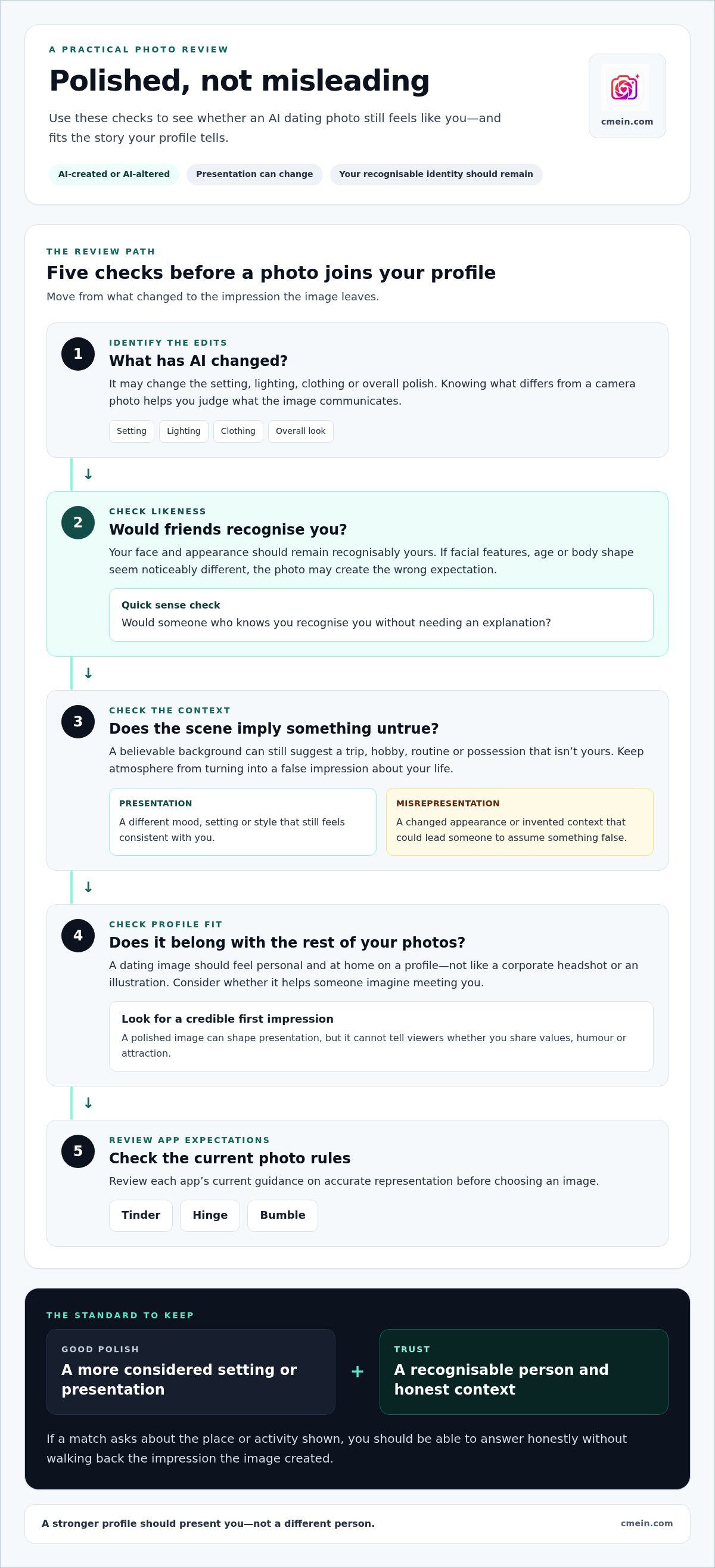
Trust is shaped by the expectations a profile creates. A photo doesn’t need to show every detail of your life, but it shouldn’t leave someone feeling that the person they meet is substantially different from the person they saw online. Choose images that set expectations you can comfortably meet.
Before adding an AI image, run through these checks:
- Check your likeness. Does your face still look recognisably like you, including alongside your other profile pictures? If someone who knows you would struggle to identify you, the image may create the wrong impression.
- Check the implied story. Consider whether the clothes, setting or activity suggest something about your lifestyle that isn’t true. A scene can look convincing while implying a trip, hobby or routine you don’t actually have.
- Imagine discussing it openly. If a date asked how the picture was made, could you answer plainly? If explaining it would feel awkward because the image overstates your appearance or life, choose another.
- Review the app’s current rules. Check the official photo policies for the platform where you plan to post. Tinder, Bumble and Hinge may set out their rules differently, and policies can change. Don’t assume that what’s allowed on one app is allowed on another.
A practical trust check before using an image
Look at the image as part of the whole profile, not in isolation. A single polished photo may seem plausible, but a group of pictures that show different-looking faces, body shapes or styles can feel inconsistent. Ask whether the image fits the person represented by the rest of your profile, rather than whether it looks impressive on its own.
Then consider the first-date conversation. You don’t need to lead with a technical explanation, but you should be able to talk about the image without dodging the truth. If you’d feel compelled to hide how it was made, that discomfort is useful information.
Check platform rules and be ready to answer honestly
Before publishing, go to each app’s official guidance and read the current photo requirements. Don’t rely on old advice, social posts or assumptions about another platform’s approach. Where the rules are unclear, avoid treating silence as permission to misrepresent yourself.
If someone asks whether a profile image was AI-generated, answer calmly and directly. For example: “Yes, AI helped create that photo, but it’s meant to look like me.” Be accurate about what was changed. A simple answer can keep the conversation grounded; defensiveness or a misleading explanation can undermine trust more than the image itself.
CMeIn’s AI dating photos are made for dating profiles. Apply the same checks for likeness, honest context and app rules before using an image.
How CMeIn Approaches AI Dating Photos
Once you know what makes an image useful and where it can mislead, the next question is whether you want a dating-specific service or a general image tool. CMeIn creates AI-generated dating profile photos tailored for Tinder, Bumble and Hinge. The focus is dating profiles, not broad creative image-making or formal workplace portraits.
That focus matters because a profile picture has a particular job. It should feel suitable for a dating app and help present a recognisable person, not invent a character or promise a certain response from potential matches. Images are one part of a profile. They can’t establish compatibility or replace the conversation that follows.
A dating-focused alternative to a general AI image tool
A general AI image platform can serve many creative purposes, from making illustrations to exploring visual ideas. CMeIn creates AI-generated photos for dating profiles, with the intended use clear from the start. A dating picture is treated as a profile photo, not just another piece of AI art.
CMeIn offers dating-photo packages for men and women, with guidance on selecting effective profile photos. That guidance helps you think about how images work together in a profile, rather than judging each one only by how polished it looks. The important question remains whether the photos feel credible and represent you in a way you’re comfortable standing behind.
Decide whether CMeIn fits what you need
A dating-focused option may suit you if you want profile photos made for dating apps and value support in choosing which images to use. If you prefer ordinary camera photos with no AI generation, use those instead. There’s no single format everyone needs. Choose based on what you want from your profile and how comfortable you feel using generated images.
Before using any image, consider the impression the full set creates. The goal isn’t to assemble a flawless persona or make your life look more interesting than it is. It’s to build a credible profile that feels consistent with the person someone could meet. Keep the pictures aligned with your appearance and the way you want to represent yourself.
CMeIn provides dating-focused AI photos for Tinder, Bumble and Hinge, along with guidance on selecting effective profile images. If that fits what you’re looking for, Explore CMeIn’s AI dating photos.
Choose a Profile That Feels Like You
Your next step doesn’t have to be a complete profile overhaul. Start with the photos you already have and decide what, if anything, feels missing. Maybe you want more variety. Maybe you’d rather keep every image as a direct camera photo. Either choice is valid if you feel comfortable standing behind it.
Before adding AI dating photos, picture the moment someone recognises you from your profile. If that feels easy, the image may fit. If it makes you want to explain away the difference, trust that reaction. The aim isn’t to meet an impossible standard. It’s to make a choice that lets you show up as yourself.
If you’d like a dating-focused option for your next profile update, explore CMeIn’s AI dating photos. Choose images that feel credible and right for you. A profile can start a conversation; you get to bring the real person to it.
Frequently Asked Questions
Can Tinder, Bumble, and Hinge users use AI-generated dating photos?
AI-generated photos may be used if they represent the person accurately, but each app’s rules can differ and may change. Before uploading, read the current photo guidance in the app you plan to use. Don’t rely on a rule you saw in an old article or assume Tinder, Bumble and Hinge take the same approach. If a platform offers a way to label or disclose AI-assisted images, follow its current instructions.
Is it misleading to use AI dating photos?
It can be misleading if the image gives someone a false idea of your appearance or life. A different setting alone may not misrepresent you, but an image that suggests a hobby you don’t have or changes your appearance substantially can create an expectation you can’t meet. Consider what a viewer might reasonably infer from the picture. If the impression isn’t true, choose a different image or use a real photo instead.
How can you tell if a dating profile photo was made with AI?
There’s no reliable visual clue that proves a photo was generated with AI. Look for details that seem inconsistent, such as distorted jewellery, odd reflections, uneven edges or background objects that don’t make sense. These can raise questions, but camera photos can also contain visual flaws, and polished AI images may show no obvious signs. Treat clues as reasons to look more closely, not as proof about who made the image.
Can AI dating photos guarantee more matches?
No. AI dating photos can’t guarantee matches, replies or dates. A photo is only one part of a profile, and people respond to more than its visual polish. A generated image may help you present a different setting or style, but it can’t predict someone else’s preferences or establish compatibility. Choose pictures that represent you comfortably, then judge their value by whether they feel honest and fit the rest of your profile.
What should you do if someone asks whether your dating photo is AI-generated?
Answer directly and without making it a bigger issue than it needs to be. You might say, “Yes, AI was used to create that image,” then explain briefly what’s accurate about it. Don’t claim a generated picture was taken on a trip or at an event if that didn’t happen. If the question raises a concern, listen and clarify rather than turning the conversation into an argument about whether the image looks real.
Should every photo on a dating profile be AI-generated?
No. There’s no need to make every profile picture with AI, and using only generated images may leave viewers with less context about your everyday appearance. Include photos that give a fair sense of how you look in ordinary settings, if that feels right for you. You can decide image by image. The useful measure isn’t how many pictures use AI; it’s whether the profile as a whole feels consistent and genuine.