Making Dating Photos With ChatGPT or Gemini: What Works and Where It Slips
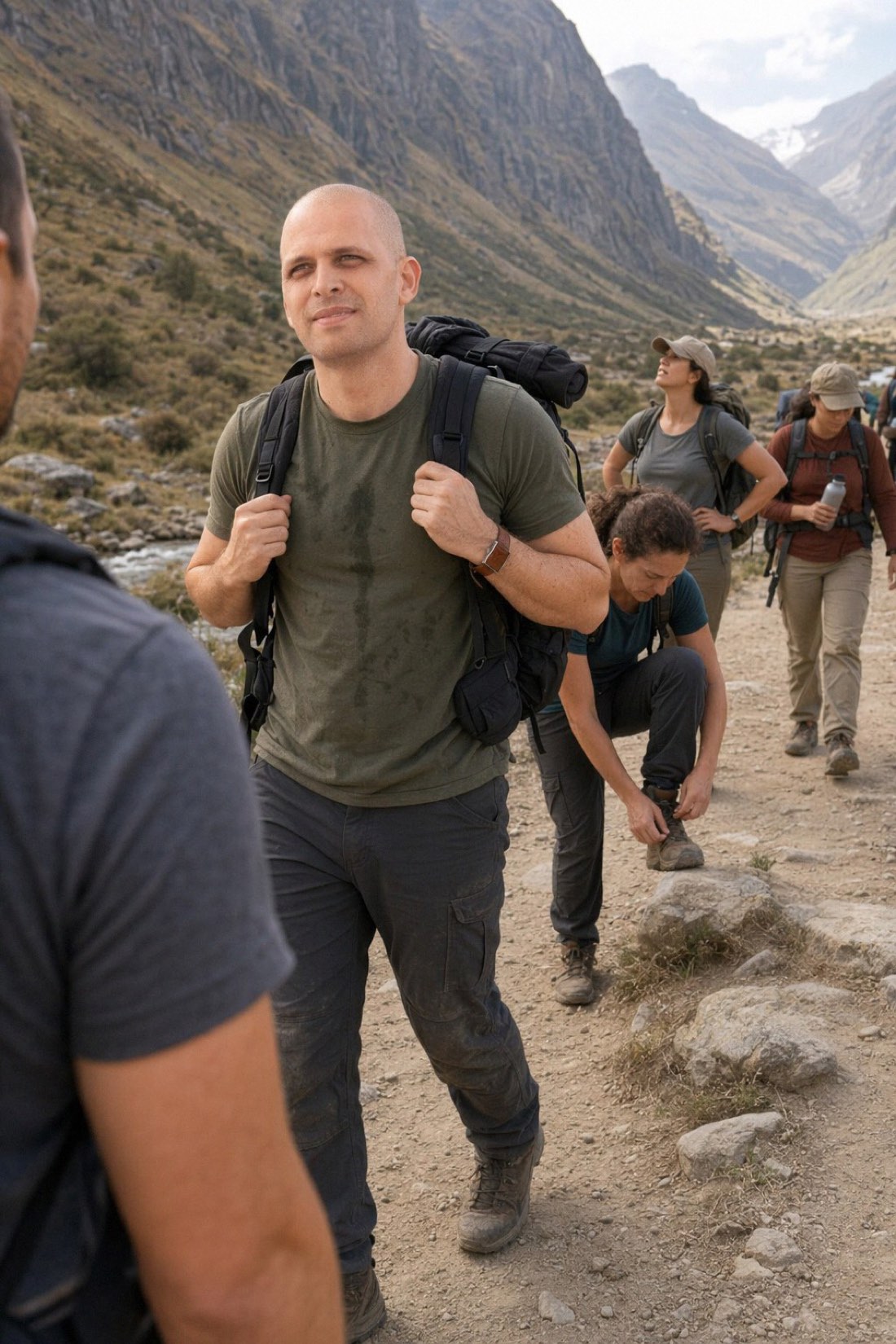
You do not have to pay anyone to get AI dating photos. Upload a selfie to ChatGPT or Gemini, describe a scene, and a minute later you are on a mountain trail or at a dinner table. For a lot of people that is enough, and it is worth knowing how to do it well.
It is also worth knowing exactly where it falls down, because the failure is not obvious until you are sitting across from someone.
How to do it
- Start with a good photo of yourself. Clear face, natural light, looking roughly at the camera, nothing covering your face. The model can only keep what it can see.
- Describe a situation, not a place. "Me in Paris" gets you a tourist photo. "Me at a busy dinner with four friends, passing a dish across the table, everyone laughing" gets you a moment.
- Ask for candid. Say you want an unposed photo that looks like a friend took it on a phone, not a studio shot.
- Ask it not to improve you. Say plainly: keep my face exactly as it is, do not smooth my skin, do not change my jaw, do not make me look younger.
- Check every result against a real selfie. Put them side by side. If a stranger would not say "same person" immediately, throw it away.
What to ask for so the photo actually works
The scene matters more than the tool. Most people ask for the wrong thing: a nice backdrop with them standing in front of it. That produces a portrait with scenery, which tells a stranger what you look like and nothing about your life.
Two things make a dating photo work, and you can ask for both by name.
Social convention. Be photographed inside a real social situation. Other people in the frame, something happening, you part of it rather than posed in front of it. This is what makes the photo believable as a moment from your life.
Social leadership. Be the one the moment is organised around. The others are turned toward you: you are telling the story, handing out the food, leading the group up the trail. It does not need to be loud. It needs a centre, and the centre is you.
Together they make social composition: a frame where a stranger sees who you are, sees that you lead, sees something interesting happening and wants to be part of that moment, and to be there with you. That wish is what stops a thumb. A good-looking man alone in front of a view asks to be rated. A man at the centre of a good evening asks to be joined.
So a better prompt is something like: "Candid phone photo of me at an outdoor table with five friends on a summer evening, I am telling a story and they are all turned toward me laughing, natural light, keep my face exactly as in the reference photo, no retouching."
Where it slips
Your face drifts. These models redraw the entire image, you included. Each new generation can reinterpret small details: the shape of your eyes, your jaw, your skin tone, your hairline. It is a well-known enough problem that whole guides exist on how to stop ChatGPT changing your face. One photo might be very close. The next is slightly less so.
A set does not hold together. A dating profile is four to six photos, and the person looking compares them. Generate each one separately and you can end up with five photos of five slightly different men. Each might pass on its own. Together they look like a family.
It leans toward flattering. Unless you push against it, the default output tends to be a little smoother, a little sharper and a little younger than you. That photo performs well until the date, which is the one moment that counts.
Every scene starts from a blank prompt. Nothing is wrong with that if you enjoy it. But writing, rerolling and checking each scene is real time, and getting a group of people to behave like a real social situation takes more attempts than a single portrait.
When the free route is enough
If you get two or three results that a friend would instantly recognise as you, inside situations that have people and a moment in them, use them. That is a good outcome and it cost you nothing.
When it is not
If the face keeps shifting, or you need a whole set that looks like the same person, that is the problem CMeIn is built to solve. It does not ask you to write prompts: it has over 4,500 scenes, and they are situations rather than backdrops, so every one puts you inside a real social moment as the one it is organised around. It builds the likeness from several angles of your face and does not retouch it at all.
It is not free, but it is close to it to try: $2.99 for two photos, no subscription. For more on why the composition matters, read social composition.