Professional Photos on a Dating Profile? Why Polish Costs You Matches
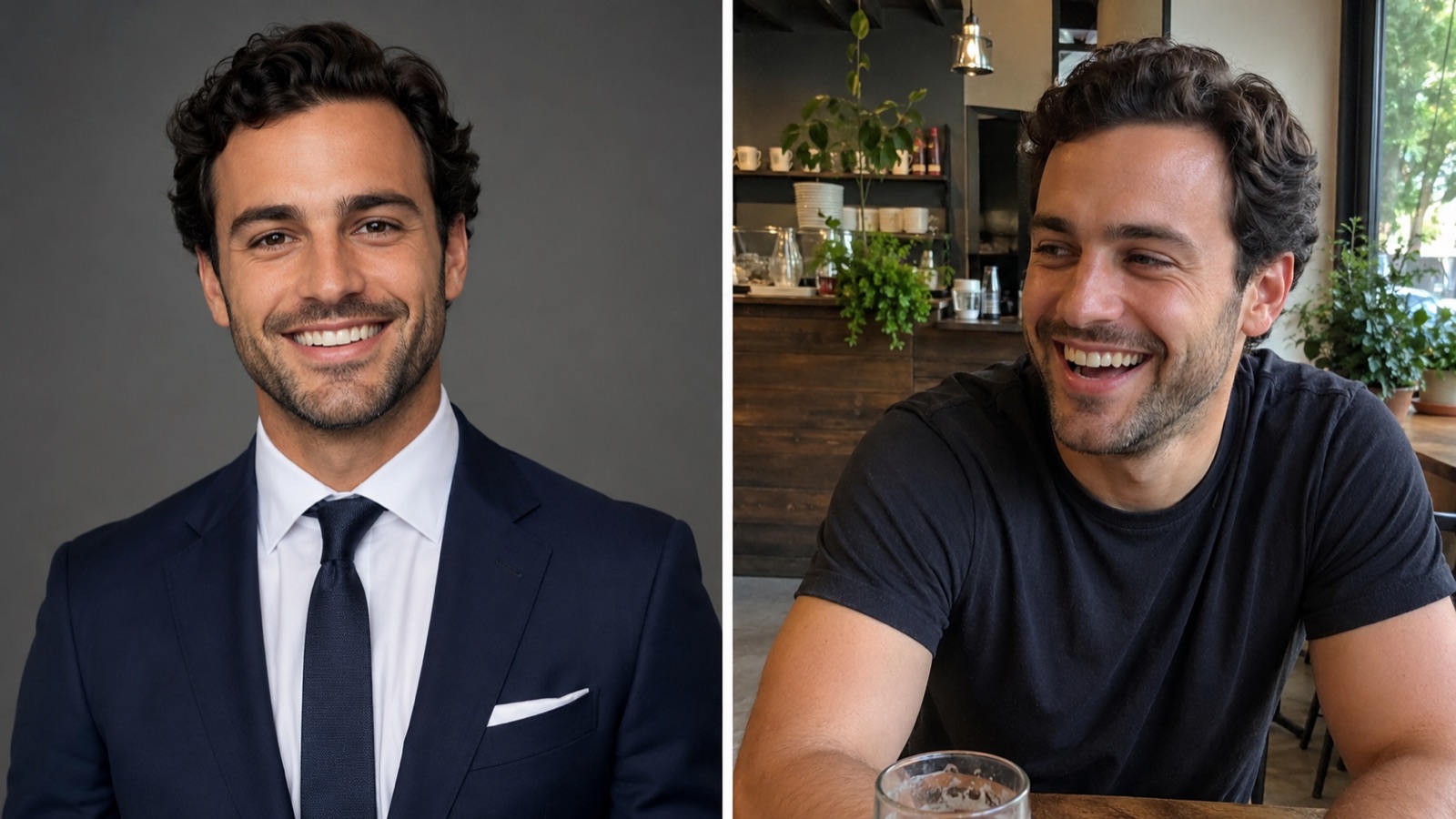
It feels like the responsible move: photos matter, so hire a pro, get the lighting right, look your absolute best. Then the polished set goes live and the matches go down — and nobody tells you why.
Here's why: everything that makes a photo professional makes it worse on a dating app. Not despite the quality — because of it.
The two ways polish kills the swipe
A visibly professional photo forces her into one of two reads, and both end badly:
Read one: "this is staged." Studio light, posed angle, deliberate confidence — the visual language of marketing. And everyone under forty has spent a lifetime learning to discount marketing. The photo says performance, and performance triggers the question performance always triggers: what's being compensated for? In our chat-series words: you look like a resume — the guy she picked looked like a Saturday.
Read two: "this is fake." The cruel irony of 2026: real professional photos and bad AI photos share the same tells — perfect skin, perfect light, perfect teeth. She's already screening for fakes on every swipe, and your $400 studio session pattern-matches to the thing she's screening out. Polish doesn't just fail to impress; it gets flagged.
Either way, the photo dies at the same checkpoint: the first question isn't "is he attractive?" — it's "is this real?" Polish delays the yes. Candid skips the question.
What the swipe actually rewards
The photos that convert look like evidence, not advertising: shot by a friend from across the table, ordinary daylight, a background where a life happens, skin that has texture, framing that's slightly imperfect. Not because sloppiness is charming — because believability is the currency, and imperfection is what believability looks like.
There's a deeper reason too: a dating profile isn't a portfolio, it's an invitation. A studio portrait puts you on a pedestal — admirable, distant, complete. A candid moment puts a chair next to you — approachable, joinable, in progress. Pedestals get admired. Chairs get taken.
The retouching trap
Edited photos deserve their own warning, because they fail later and worse. Smoothed skin and a sharpened jaw might win the swipe — and then the first date arrives, the comparison happens in real time, and the mismatch reads as deception at the exact moment trust is being decided. The photo's real job was never to win the swipe. It's to survive the hello.
When professional is fine
- Deep in the set, once — a sharp dressed-up photo as the "cleans up well" note, after the candids have done the persuading.
- Candid-style photographers — pros who shoot in real settings with no retouching produce photos that don't look professional. That's the point: if you're paying, pay for invisible.
- LinkedIn — where polish is the native language. Same face, different country.
The fix
Build the set around moments: a clear daylight lead, a cafe, a trail, a dinner with friends' shoulders in frame. Get them from a friend with a phone — or generate them: CMeIn is tuned in exactly the anti-polish direction — natural skin, ordinary light, real-looking places — because the photo nobody questions is the photo that converts. Free credits to test it on the only face that matters: yours.