She Already Said Yes. Don't Lose the Date in the Logistics.
Of the four ways a first text can start, this one sounds like the freebie. She said yes in person. The date exists in principle, agreed on a Friday-morning train over a shared Murakami and a book-swap deal: each brings one that has to be read twice. All that's missing is a day, a time, a place. What could go wrong between "yes" and "when"?
Two things, it turns out, and they're both invisible until they've already cost you the date. This chapter is about a text thread that started nine hours after the train and ended, forty-nine minutes later, with her demanding the plan, and about the two traps it stepped around on the way.
Trap one: the two clocks
She'd handed him a deadline with the number: "If you haven't texted by Wednesday, I'll assume Scotty still doesn't know." Sounds like he has until Wednesday. He doesn't, and neither do you.
A deadline she gives you is the outer bound, not the target. The man who rides it to the last day "because it's allowed" is optimizing for imaginary leverage while two real things decay: the momentum of the meeting, and the actual shared window, in this case, both of them in town only until Sunday. Wednesday was never the clock. Sunday was.
He texted the same evening. Her ledger noted it immediately, "four days before the deadline. Noted." Early, inside her deadline, with a calm message, reads as a man who decides. The three-day-rule crowd protects an image nobody was grading.
The opener: mid-contract, no hello
"The book's on me. There's even a dedication."
Five words plus a hook, from an unknown number, and zero identification problem: exactly one person on earth owes her a book. Like the assigned-homework text, the agreement is the identification. And the message doesn't ask anything, it reports execution: book chosen, assignment already in motion, nine hours in.
Then the hook did its work. "There's even a dedication", and she stopped everything, took the phrase apart, built two competing theories about it, and explained which one would prove her own second-read thesis. When she's doing literary analysis on your text message, you've picked the right currency for the recipient. A conspiracy hook for one woman, evidence for another, an artifact with a story for a reader: the hook is always calibrated to her.
One more calibration note: her first reply took 27 minutes, and every reply came in full sentences. That's not coldness, that's her tempo. Don't flood the gap between an absorbed reader's messages.
Trap two: "send it now"
He answered her question directly, the dedication was written for her, and she came back with the most flattering demand a gesture can earn:
"There is no chance I hold out until we meet. Send a photo of the dedication. Now."
Here is the trap, and she doesn't even mean it as one. That dedication is currently the physical reason to meet: the one object that exists only in the book, only in his hands, waiting only for her. Send the photo and the gift has been opened remotely. The meeting quietly demotes itself to "just coffee." Enthusiasm asked for it; enthusiasm would also, invisibly, be disappointed by receiving it.
But a flat refusal is a wall, and walls have their own cost. What he sent instead is the move this chapter exists to teach:
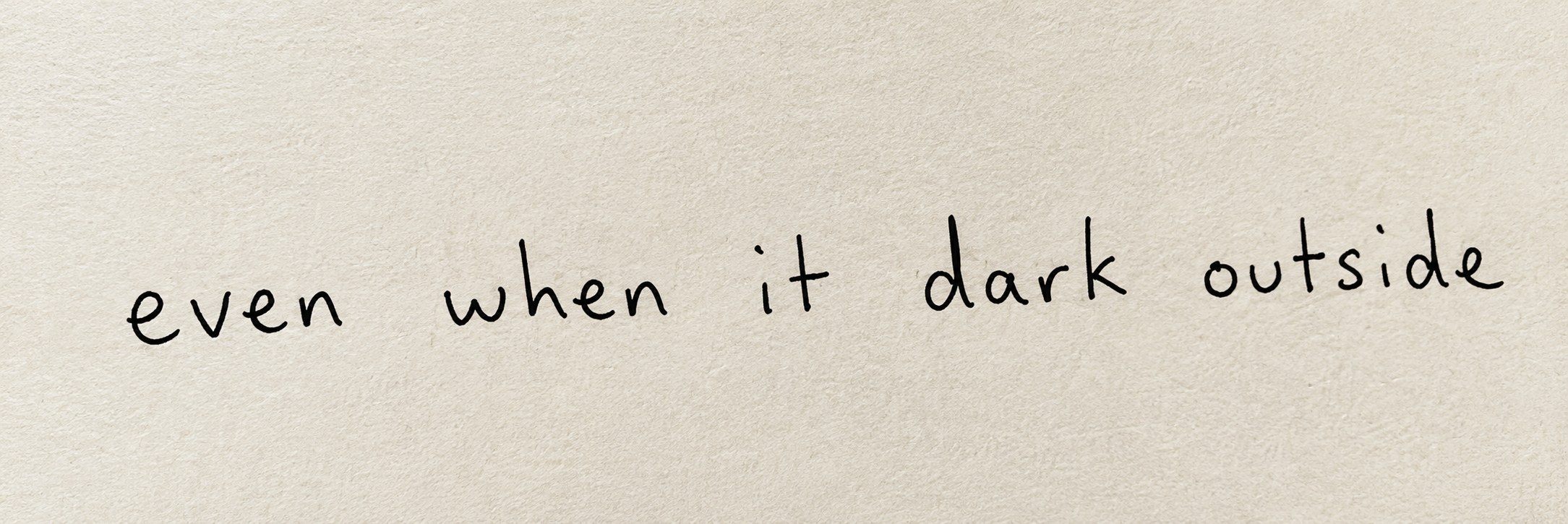
The half-reveal. A photo of the book, open to the title page, handwriting visible, and a finger covering the second line. Readable, only the first: "Even when it's dark outside..."
She got something real, her demand didn't hit a wall, and the payoff stayed locked where it belongs, in the book, at the table, tomorrow. To a curious mind an ellipsis is sweet torture: she spent the next hour completing the sentence in her head, on a loop, listing her guesses out loud. The dedication was already running in her mind before they'd set a time. That's presence at a distance, and no full reveal buys it.
Three minutes later: "I surrender. Tomorrow. Say where and when, and I'm there with my book."
The close, delivered into his hands, the fourth thread in a row where properly-done work ends with the other side demanding the finish.
Read her guesses: they're the spec
Buried in her three guesses about the hidden line were two instructions she'll never state directly: a verbatim quote from the book would disappoint ("too easy, Mike"), and her hopeful middle guess pointed at what she wished was written there. She drafted the requirements of his own dedication, the way people negotiating with a mystery always leak what they want it to be. Listen when she negotiates with your mystery.
Which is the deeper rule under the whole gesture, call it the fingerprint principle: a beautiful line that fits anyone is worth less than a plain line that fits only her. "Even when it's dark, there's light" can be written to any woman in any city. The line that lands is the one anchored in something observed, the detail she didn't know you noticed. Before any gesture, run the test: could this exact thing be addressed to someone else? If yes, it isn't finished.
No, we're not printing the second line. She read it the next morning, at a window table, in the opening ceremony she designed herself: books swapped, dedications read in complete silence, no talking until both are done. Her rules, her ritual, her lateness clause. When she designs the ceremony, the date is joint property, and that, always, is the real yes.
The close, for the record
"10 AM. The café on the hill. We're meeting."
Time, place, declarative, no question mark. Morning coffee, because they'd met on a morning train, thematic consistency he didn't even plan, and because coffee in daylight is exactly right for two people whose whole connection is conversation.
The four first-texts, complete
This chapter closes the set. Four configurations, four different problems:
| You're holding | The problem | The play |
|---|---|---|
| Her number, nothing agreed | Identify yourself without a name | Continue the bit; bring a gift |
| A promised delivery | Live up to your own brand | Evidence, not claims |
| An assigned first message | The hidden test inside compliance | Execute exactly, add one step |
| A yes in principle | Two clocks and the burn-the-card trap | Open mid-contract; half-reveal; let her demand the plan |
Different problems, one constant: the work is done by seeing her clearly, her tempo, her currency, her clocks, and building the next move out of what you actually observed. Which is also, for the record, how a profile earns a first message: photos that could only be yours beat photos that could be anyone's. Specificity is what reads as real, in a dedication, in a text, and on the page she'll judge you by before she ever knows your name.