When AI Photos Change Your Skin Tone
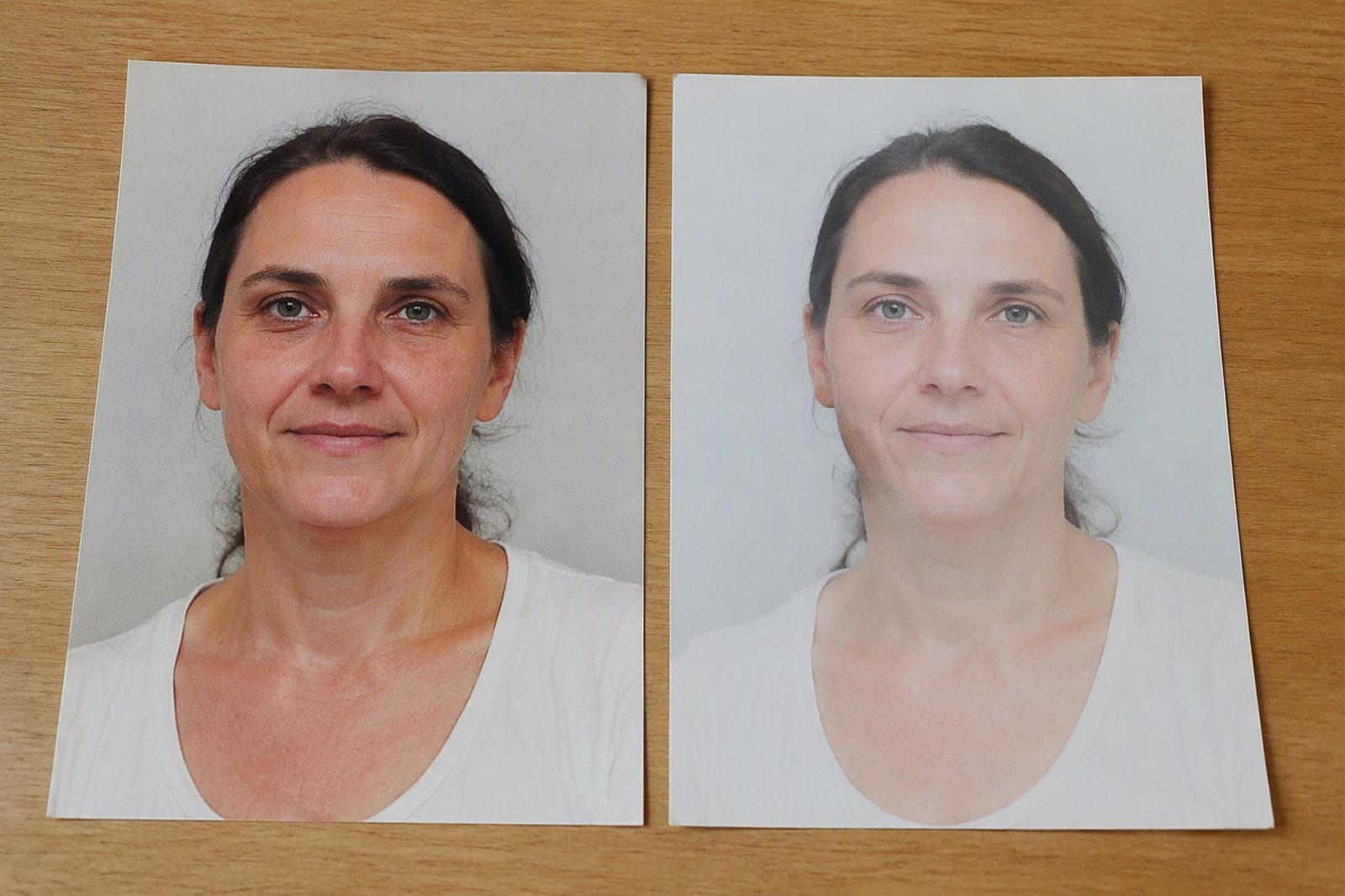
There is a review of a well-known AI headshot tool that is harder to read than the usual complaint about quality:
"NONE of the AI pix they created for me looked like me. One darkened my skin so I looked like I was from India. One made me into a gorgeous supermodel. And one gave me a round face, when mine is thin."
Three different people came back, and none of them were him.
This is the version of "it doesn't look like me" that nobody in the category writes about, because it is uncomfortable. It is also the most explicable, and the most preventable.
Why the drift happens
The model has an average face, and it pulls toward it.
Every image model learns from an enormous set of pictures, and those sets are not evenly distributed across the people in the world. Some faces are heavily represented and some are not. When the model is uncertain — and with only a few reference photos it is uncertain about most of you — it falls back on what it has seen most.
That fallback shows up in a specific and consistent way: skin lightens, features narrow, hair texture smooths, face shape rounds toward a norm. Not because anyone decided it should, but because that is what "most likely" looks like in the data.
And it is worse the less you give it. A tool working from three photos has to invent the rest of you. The invention comes from the average.
Your lighting becomes your colouring
This one catches everybody and has nothing to do with the model's training.
If you upload photos taken under a warm indoor bulb, the model does not know that the amber cast is the lamp. It reads it as your skin. Photos under a cool office fluorescent go the other way. Photos in a room with a coloured wall pick up the wall.
You uploaded pictures of yourself in a particular light. The tool received pictures of a person whose skin is that colour.
This is the single most fixable cause, and it is fixable by you: upload in ordinary, even daylight. Not bright sun, which throws hard shadows. A window on an overcast day is close to perfect.
The words in the prompt are doing something
Every one of these tools writes a prompt behind the scenes. You do not see it, but it is there, and it is where a lot of the drift is decided.
Words like polished, flawless, professional headshot, magazine quality are not neutral. They carry an aesthetic, and that aesthetic has a default appearance attached to it — one that has been lightening skin and narrowing features in commercial photography since long before AI existed.
A tool that asks the model for a flawless professional portrait is asking for the average. It will get one.
What a tool has to do about it
Not much, but it has to actually do it: tell the model, explicitly, to hold what it was given.
The instruction has to name the things that drift. Not "make it look like them" — the model believes it is doing that. It has to say: preserve the skin tone, the facial structure, the hairline, the age. And it has to say it in the prompt that goes with every single generation, not once in a settings page.
It also has to hold that line against its own beautification. There is a constant pull in these systems toward improvement, and improvement and likeness point in opposite directions.
What we do
Our instruction to the model names it directly. Every generation carries the line "preserve the facial features, skin tone, beard, hairline, age, and overall facial structure so the result clearly still looks like the uploaded person."
And the editing tools carry a hard limit of their own: "this is a real person — never push edits so far that skin tone, identity, or believability is compromised."
We are not going to claim this makes drift impossible. It is an instruction to a model, not a guarantee from a database, and the underlying pull toward the average is real for us as it is for everyone. What we can say is that the instruction exists, it is explicit, and it is in every request — rather than us hoping the model works it out.
The wider design point is the same one that governs everything here: the test we build against is whether someone who knows your face would recognise you walking into a coffee shop. A photo that improved your colouring has failed that test, however good it looks on its own.
The short version
Skin tone drift is not one problem, it is three: the model's average, your lighting being mistaken for your complexion, and beautifying language in a prompt you never see.
You can fix the second one today by shooting in plain daylight. The other two are the tool's job — and whether a tool does that job is visible in whether it will say so.