Why Your Uploads Keep Getting Rejected — And What to Send Instead
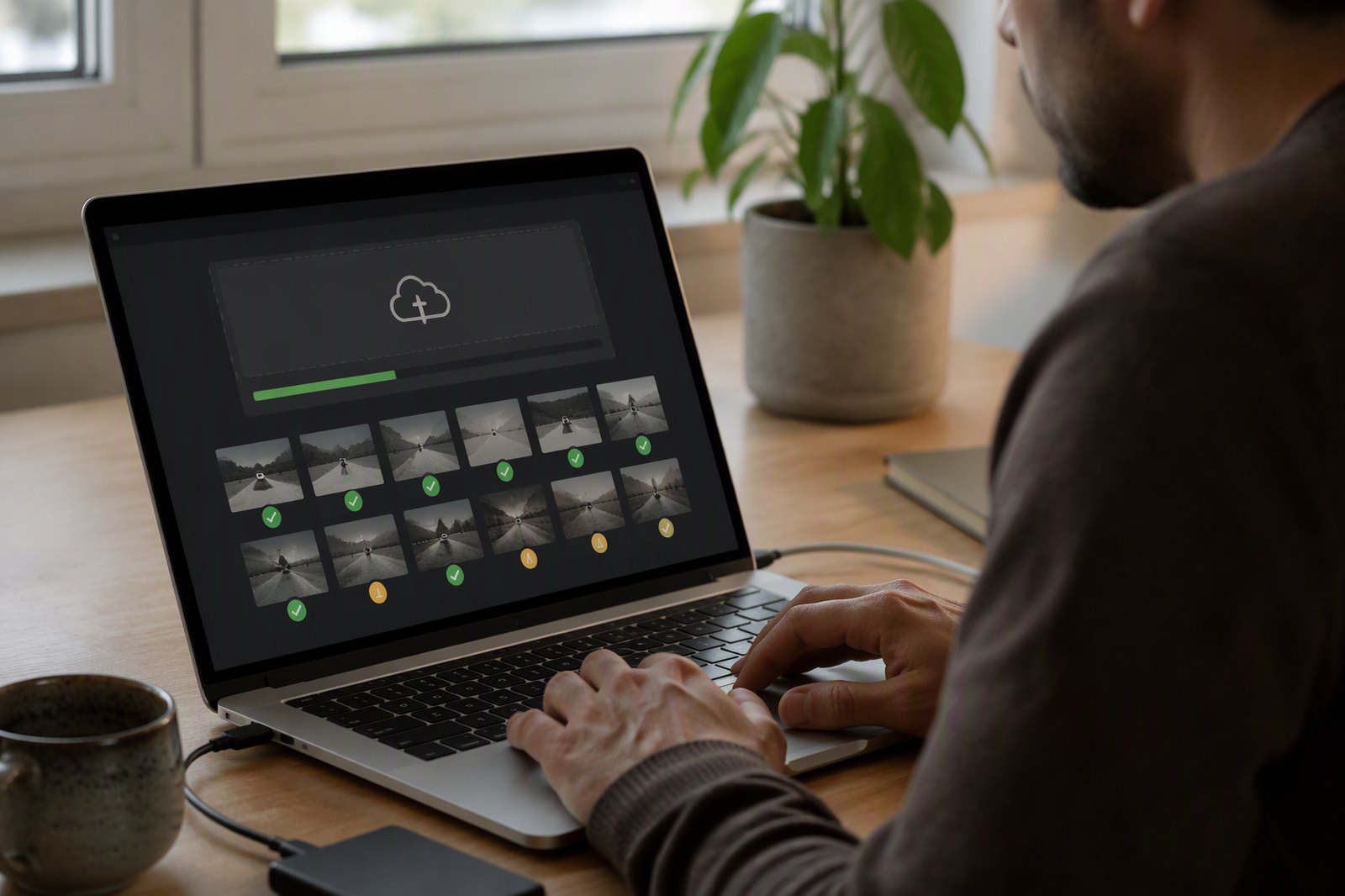
A reviewer of a well-known AI headshot tool, on the part of the process nobody markets:
"The process of uploading pictures was rather frustrating. I had to upload about 20 to get 6 that they would accept."
And a reviewer of a different tool, with the opposite complaint:
"Headshot Pro only asked for 3 images — I did try to add more, but was unsuccessful."
One person was blocked from giving enough. The other was made to work for it. Both ended up with a weaker likeness than they should have, and in both cases the upload step — the bit that feels like admin before the real thing — was where the result was actually decided.
What the screen is looking for
The rejection is usually right. Five things get a photo turned away, and four of them genuinely would have damaged your results.
Another face in the frame. A group photo, someone in the background, a poster on the wall behind you. The tool cannot reliably tell which face it is meant to learn, and a single wrong guess contaminates every later generation.
Your face too small. A full-body holiday photo where your head is two hundred pixels across contains almost no facial information. It looks fine to you because you know who it is. To the model it is a blur with a hairstyle.
Something covering it. Sunglasses, a cap brim, a hand, a mask, hair across half the face, a heavy shadow. Anything hiding the landmarks — nose shadow, eye sockets, jaw edge — removes the features you are recognised by.
Heavy processing. Beauty filters, strong compression, screenshots of photos, images that have been sent through three messaging apps. The filter already changed your face once; the model then treats the changed version as you.
And the one that is not about quality: it is too similar to one you already sent. This one frustrates people the most and is the most useful rejection of all. Eight versions of the same three-quarter selfie is one photograph submitted eight times.
Why three photos is not generosity
The tool that asks for three and will not take more is making a conversion decision, not a technical one. A short upload step loses fewer people at the door.
The bill arrives later. With three photos the model has three real views of you and must invent every other angle, every other expression, the parts of your face none of them showed. The inventions are what come back as "this isn't me" — and by then the upload step is long forgotten and the tool looks bad at generating, which is not quite what happened.
The eight photos that get through
Not the best eight photos of you. The eight most different ones.
- Different days — same day means same haircut, same weight, same lighting, same everything
- Straight-on, not only flattering three-quarter angles
- A real expression — an actual laugh, not a posed smile
- A neutral one
- Ordinary even light — a window on an overcast day beats everything
- Nothing on your face — no sunglasses, no hat, no filter
- You alone in the frame
- Full resolution — from the camera roll, not a screenshot, not a chat export
If you are choosing between a beautiful photo and a plainly lit boring one, send the boring one. The beautiful one has already made decisions about your face that the model will now treat as facts.
What we do
We screen uploads and tell you what is missing rather than only what is wrong. Because the system works on pose coverage — which angles and expressions it actually has — it can see when a set is short of something and say so, instead of accepting whatever you gave it and producing a weaker batch.
That is why a rejection here is worth reading rather than working around. A set that got through by adding a ninth copy of the same angle passed the count and failed the point.
The short version
Most rejections are the tool protecting your results: another face, a face too small, something covering it, heavy processing — or a photo that duplicates one you already sent.
Six to ten photos, and variety beats quality every time. The plainest, most ordinary, most different eight pictures of you will beat twenty flattering near-identical ones, because the second set is one photograph wearing a disguise.