AI Photo Generator: How to Create Real Photos

The rise of AI-powered image generation has fundamentally changed how we create and share visual content online. An ai photo generator allows anyone to transform a handful of personal photos into realistic images across countless scenarios without expensive photography sessions or studio time. These tools have become essential for professionals building LinkedIn profiles, singles crafting dating app presence, and anyone who needs high-quality images that genuinely look like them. Unlike traditional photo editing or generic filters, modern AI photo generators preserve your natural appearance while placing you in new contexts that would otherwise require professional shoots.
Understanding How AI Photo Generators Work
At the core of every ai photo generator lies a sophisticated neural network trained on millions of images. These systems use diffusion models and advanced architectures that have revolutionized image synthesis since 2023. The process begins when you upload several reference photos-typically between five and twenty taken from different angles and lighting conditions.
The AI analyzes facial structure, skin texture, hair characteristics, and dozens of other biometric markers to build a detailed understanding of your appearance. This learned representation becomes the foundation for generating new images.
The Technical Foundation
Modern generators rely on three key technical components:
- Facial encoding: Extracting unique features from your reference photos
- Scene composition: Understanding environmental context, lighting, and positioning
- Coherent synthesis: Blending your likeness seamlessly into new scenarios
The most effective systems employ what researchers call "consistency preservation," ensuring that generated images maintain the same person across different outputs. Recent comprehensive surveys on diffusion models highlight how these architectures balance realism with identity retention, a crucial balance for generation applications.
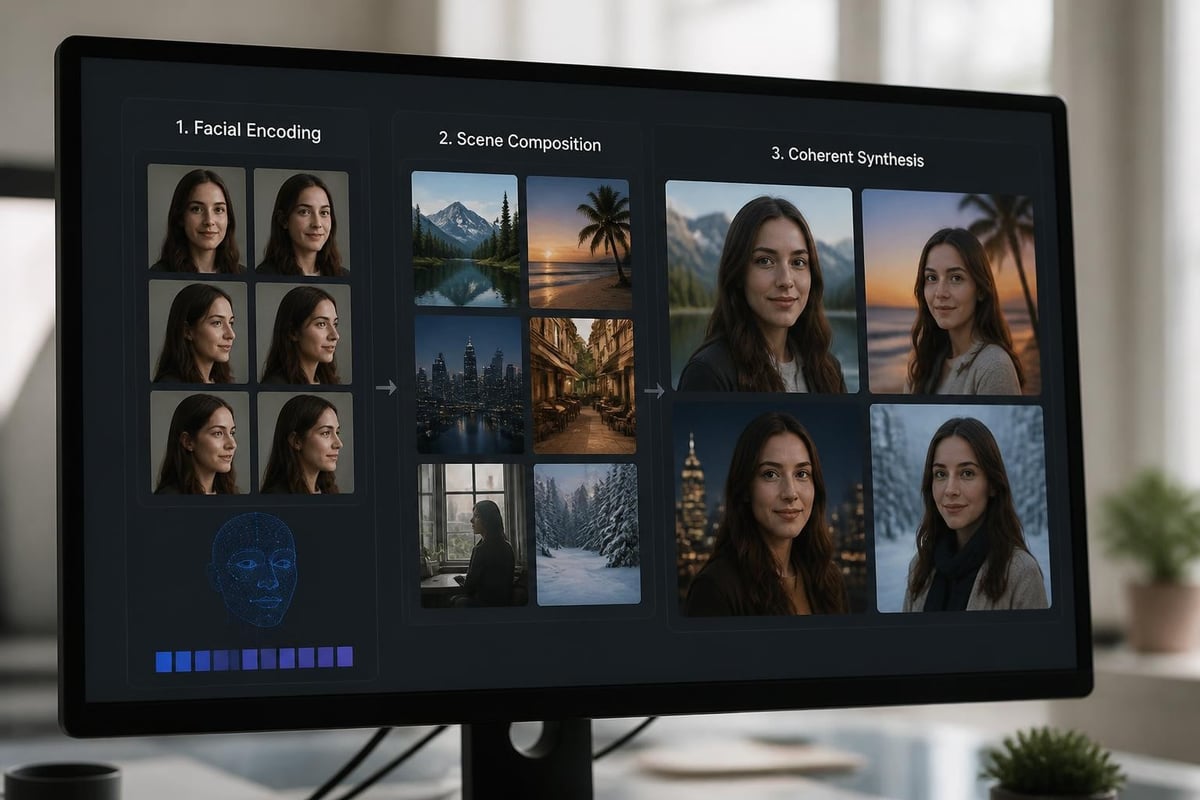
Unlike simple filters or overlays, an ai photo generator reconstructs you within entirely new photographic contexts. The technology understands how light falls on faces in different environments, how clothing drapes naturally, and how poses align with specific settings.
Practical Applications for Personal and Professional Use
The versatility of an ai photo generator extends across multiple domains where authentic visual presence matters. People use these tools to solve specific problems that traditional photography cannot address efficiently or affordably.
Dating Profile Enhancement
Singles face a common challenge: they need diverse, flattering photos but lack recent images in varied settings. An ai photo generator addresses this by creating images that show you in coffee shops, outdoor settings, social gatherings, or travel destinations. Choosing dating profile photos that feel authentic becomes significantly easier when you can generate multiple options.
The key advantage lies in variety without fabrication. You genuinely appear in each image; only the context changes. This differs fundamentally from misleading photos or heavy retouching that creates unrealistic expectations.
Professional Headshots and LinkedIn Presence
Business professionals need current, polished headshots for various platforms. Traditional photography requires scheduling, studio fees, and time investment. An ai photo generator produces professional images from existing photos, maintaining your actual appearance while adjusting background, lighting, and composition to professional standards.
For those building AI-generated LinkedIn photos, the technology offers control over presentation without the awkwardness of posed studio sessions. You can generate headshots that match your industry's visual conventions while keeping your natural expression and features intact.
Social Media Content Creation
Content creators and influencers need consistent visual assets that maintain brand identity. An ai photo generator enables rapid content production across themes, seasons, and concepts without constant photoshoots. The tool becomes particularly valuable for testing visual concepts before investing in actual photography.
| Use Case | Traditional Photography | AI Photo Generator |
|---|---|---|
| Dating profiles | $200-500 per session | One-time setup fee |
| Professional headshots | $150-400 per shoot | Unlimited variations |
| Social content | Ongoing scheduling | On-demand generation |
| Testing concepts | Expensive trial shoots | Instant previews |
Quality Considerations and Realistic Expectations
Not all AI photo generators deliver equivalent results. Understanding quality factors helps you evaluate which tools will meet your specific needs and which fall short.
What Determines Output Quality
The realism of generated images depends primarily on three elements:
- Reference photo quality: Clear, well-lit source images produce better results
- Model training data: Systems trained on diverse, high-quality datasets generate more realistic outputs
- Technical architecture: Advanced diffusion models outperform older generative approaches
Many users wonder how to make AI photos look real, and the answer starts with understanding these fundamental quality drivers. The best generators preserve skin texture, maintain consistent facial features across images, and handle lighting naturally.
Common Limitations and Artifacts
Even sophisticated systems encounter challenges. Current ai photo generator technology may struggle with:
- Hand positioning: Fingers and hand poses remain difficult for AI to render perfectly
- Complex patterns: Intricate clothing details or fine textures sometimes appear slightly off
- Extreme angles: Unusual perspectives may produce less consistent results
- Multiple people: Maintaining accuracy becomes harder in crowded scenes
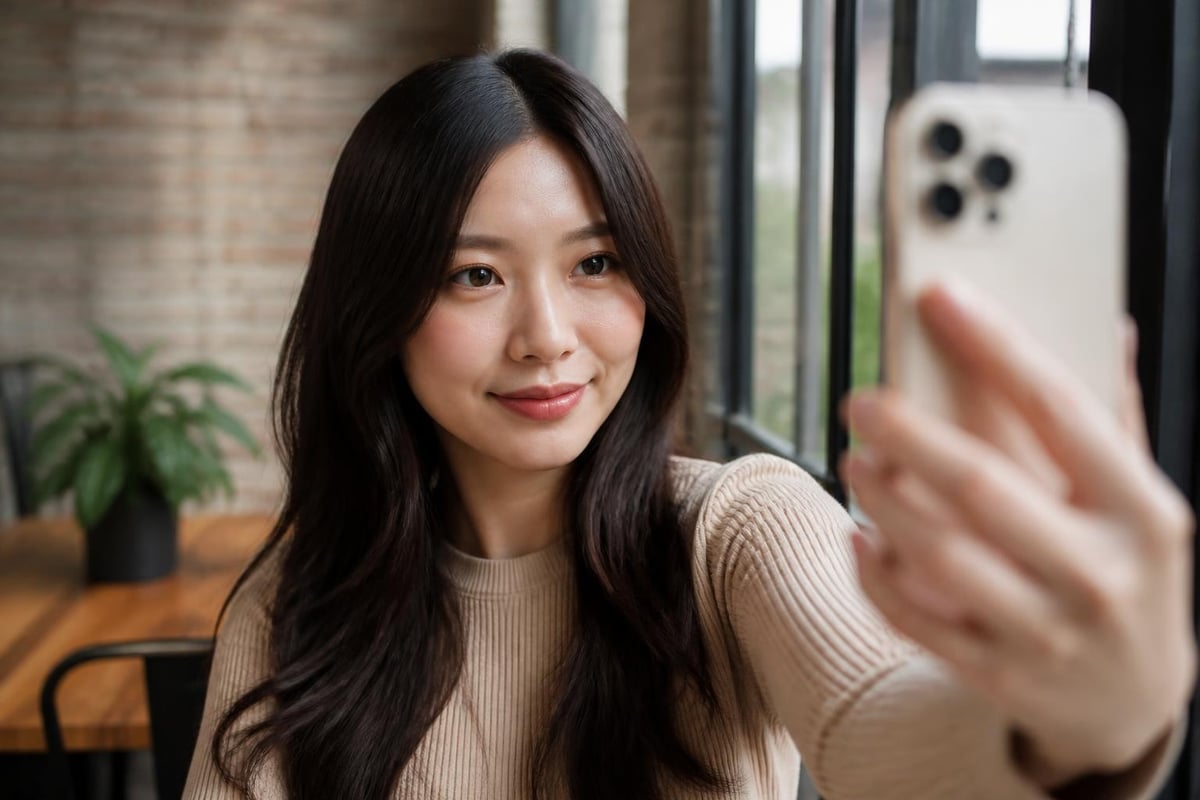
Recognizing these limitations helps set appropriate expectations. The technology excels at standard portrait compositions, everyday scenarios, and common social contexts. It performs less reliably in highly specialized or technically complex situations.
Privacy, Security, and Ethical Considerations
Using an ai photo generator involves uploading personal images to a platform, raising legitimate questions about data handling, security, and potential misuse. Responsible users and providers must address these concerns directly.
Data Protection and Storage
When you upload reference photos, you trust the service provider with biometric data. Reputable platforms implement several protective measures:
- Encrypted transmission and storage of all uploaded images
- Clear data retention policies with defined deletion timelines
- Restricted access to user images by staff or third parties
- Compliance with regional privacy regulations (GDPR, CCPA, etc.)
Before selecting an ai photo generator, review its privacy policy and data handling practices. Services should explicitly state how long they retain your photos, who can access them, and under what circumstances they might share or use your data.
Authentication and Misuse Risks
The ability to generate realistic photos of real people creates potential for misuse. Research on face morphing and detection highlights vulnerabilities in face recognition systems when confronted with synthetic images. This raises questions about authentication, identity fraud, and unauthorized use.
Emerging regulatory frameworks address these concerns. The European Commission's transparency obligations under the EU AI Act require disclosure when AI systems generate or manipulate images of people. Compliance becomes mandatory for services operating in the EU by late 2026.
Content Provenance and Watermarking
Technical standards like C2PA specifications enable embedding provenance metadata directly into images. This allows viewers to verify whether a photo was AI-generated and trace its origin. The NTIA report on AI and content provenance outlines policy recommendations for marking synthetic media, providing a framework for responsible disclosure.
Forward-thinking ai photo generator platforms are beginning to implement these standards, embedding invisible markers that signal AI involvement without degrading image quality or usability.
Choosing the Right AI Photo Generator
The market offers numerous options, each with distinct strengths, limitations, and pricing models. Selecting the right tool requires evaluating your specific use case against available features.
Key Evaluation Criteria
| Criterion | Why It Matters | What to Look For |
|---|---|---|
| Likeness accuracy | Photos must genuinely resemble you | User reviews mentioning facial accuracy |
| Scene variety | Diverse contexts prevent repetitive images | Catalog of 1,000+ distinct scenarios |
| Output resolution | High resolution enables multiple uses | Minimum 1024x1024 pixels, preferably higher |
| Pricing structure | Cost-effectiveness for your volume | Clear per-image or subscription pricing |
| Privacy practices | Protection of your biometric data | Explicit data deletion and encryption policies |
When evaluating likeness accuracy, examine the platform's example gallery to assess whether generated images maintain natural facial features without over-smoothing or artificial enhancement. The best systems preserve your actual appearance, including minor imperfections that make photos believable.
Feature Comparison for Different Needs
Different users prioritize different capabilities. Someone building dating profile pictures needs casual, social scenarios. A professional seeking business headshots requires formal settings and appropriate attire. Content creators benefit from seasonal variety and trend-aligned scenarios.
Some platforms offer specialized features worth considering:
- Pose adjustment: Ability to modify your posture within an existing photo context
- Style customization: Changing clothing or accessories while maintaining your face
- Background control: Selecting specific environments or locations
- Batch generation: Creating multiple variations simultaneously
For users who need professional imagery without studio time, services that specialize in AI-generated photos maintaining true likeness provide the most reliable results for creating dating profiles, social media content, and professional headshots.
Detection Challenges and Human Perception
As AI photo generators improve, distinguishing generated images from traditional photographs becomes increasingly difficult. This evolution carries implications for trust, authenticity, and how we interpret visual information online.
How People Identify AI-Generated
Research on human detection of AI-generated faces reveals that most people perform only slightly better than chance when identifying synthetic images. Training improves detection rates, but even educated viewers struggle with high-quality outputs.
Common tells that trained observers watch for include:
- Overly smooth skin texture lacking natural pores or variation
- Inconsistent lighting that doesn't match environmental logic
- Minor anatomical irregularities, especially in ears or teeth
- Background elements that appear slightly surreal or impossible
- Perfect symmetry that natural faces rarely exhibit
However, these indicators become less reliable as generator quality improves. The most sophisticated ai photo generator tools now produce images that experts struggle to distinguish from authentic photographs.
Demographic Factors in Detection
Studies analyzing biases in deepfake detection demonstrate that detection accuracy varies across demographic groups. People more accurately identify AI-generated images of faces from their own demographic background. This uneven detection capability raises fairness questions, particularly when synthetic images influence hiring, dating, or social decisions.
The implications extend beyond simple detection. When some generated images appear more obviously artificial based on demographic characteristics, the technology may inadvertently disadvantage certain user groups. Responsible ai photo generator development requires testing across diverse populations to ensure consistent quality.
Integration with Broader Digital Identity
AI-generated exist within larger ecosystems of digital identity, personal branding, and online presence. Understanding how these images interact with other platforms and systems helps maximize their value while avoiding pitfalls.
Platform Policies and Disclosure Requirements
Major social platforms maintain varying policies regarding AI-generated images. Some require disclosure when profile photos are synthetic. Others prohibit certain uses entirely. Before deploying images from an ai photo generator, verify that your intended use complies with platform terms of service.
Dating applications, for instance, generally permit AI-enhanced photos provided they accurately represent your current appearance. Misleading images violate most platforms' authenticity standards regardless of generation method. The distinction lies between enhancing presentation and misrepresenting identity.
Building Coherent Visual Identity
When using an ai photo generator across multiple platforms, maintain visual consistency. Your LinkedIn headshot, dating profile, and social media should all recognizably depict the same person. Inconsistent generated images undermine credibility and raise questions about authenticity.
Strategic users approach AI generation as one component of comprehensive visual identity:
- Use generated images to fill gaps in your photo collection
- Maintain a core set of traditional photos for primary profiles
- Ensure generated images reflect your actual current appearance
- Update AI-generated photos as your appearance changes
This balanced approach leverages the convenience and variety of AI generation without creating disconnect between your online presence and real-world appearance.
Optimizing Your Input for Better Results
The quality of an ai photo generator's output depends significantly on the reference photos you provide. Understanding what constitutes effective input directly improves your results.
Ideal Reference Photo Characteristics
Optimal reference photos share several qualities:
- Clear facial visibility: Avoid sunglasses, heavy shadows, or obstructions
- Varied angles: Include front-facing, three-quarter, and profile views
- Diverse expressions: Serious, smiling, and neutral expressions help the AI understand your face
- Consistent time period: Recent photos ensure the AI captures your current appearance
- Good lighting: Natural, even illumination reveals accurate skin tone and texture
Upload between ten and twenty reference photos when possible. This quantity gives the AI sufficient data to understand your features without overwhelming the system with redundant information.
Common Input Mistakes to Avoid
Several input errors consistently degrade output quality:
- Heavily filtered source photos: The AI learns your filtered appearance, not your actual features
- Group photos: Confusion about which person to learn from
- Low-resolution images: Insufficient detail for accurate facial encoding
- Extreme makeup variations: Dramatic differences between photos confuse feature extraction
- Significantly outdated photos: Generated images may not match your current appearance
When platforms like AI profile picture generators request reference photos, they're building a model of your face. The accuracy of that model determines whether generated images truly resemble you or produce a generic approximation.
Future Developments in AI Generation
The technology underlying AI photo generators continues advancing rapidly. Understanding likely developments helps anticipate both opportunities and challenges ahead.
Emerging Technical Capabilities
Several improvements are currently moving from research to practical implementation:
- Video consistency: Generating short video clips where your likeness moves naturally
- Real-time generation: Producing new images in seconds rather than minutes
- Fine-grained control: Adjusting specific elements like pose, expression, or gaze direction
- Multi-person scenes: Accurately placing you alongside specific other people or groups
These capabilities will expand use cases while raising additional questions about authenticity and appropriate disclosure.
Regulatory and Standards Evolution
Governments and industry groups are actively developing frameworks for AI-generated content. Expect more comprehensive requirements for:
- Mandatory watermarking or metadata in generated images
- Platform-level detection and labeling systems
- Consumer rights regarding AI-generated representations
- Cross-border standards harmonization
Services that proactively adopt transparency standards position themselves favorably as regulations mature. Users benefit by selecting ai photo generator platforms that embrace rather than resist these accountability measures.
Accessibility and Democratization
As computational costs decrease and models become more efficient, AI photo generation becomes accessible to broader audiences. This democratization enables people who previously lacked resources for professional photography to present themselves effectively online. The technology removes barriers to professional presence, though questions about authenticity standards remain active areas of discussion.
AI photo generators have transformed how we create visual content for digital platforms, offering unprecedented convenience and variety while maintaining genuine likeness. Understanding the technology's capabilities, limitations, and appropriate applications helps you leverage these tools effectively across dating, professional, and social contexts. CMeIn specializes in transforming your reference photos into realistic images across more than 4,500 scenes, maintaining your true likeness for dating profiles, social media, and professional headshots. Upload your to discover how AI-generated photos can enhance your digital presence while keeping your authentic appearance intact.