AI Realistic Image: How 2026 Technology Preserves You
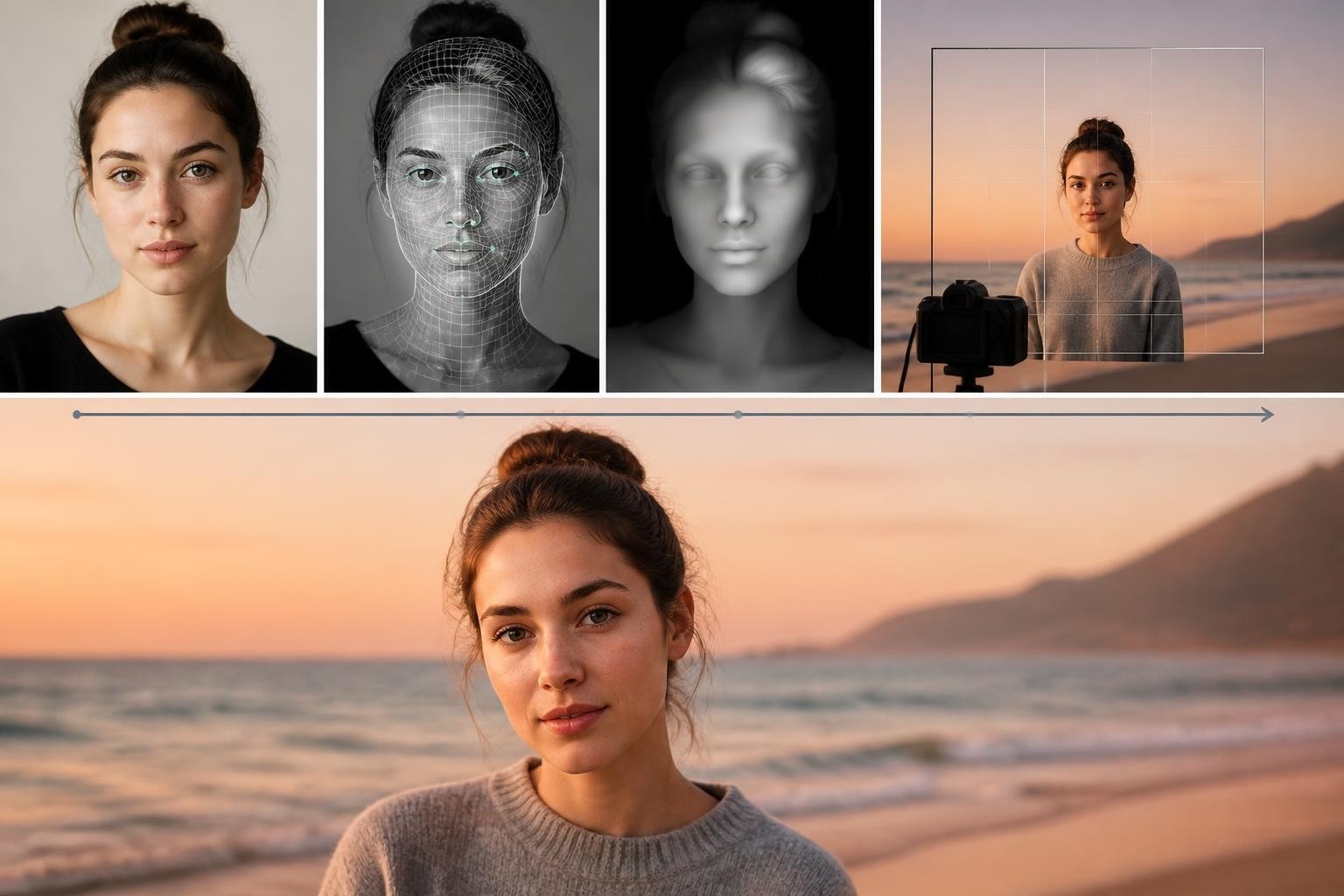
The promise of artificial intelligence in photography has always been compelling: what if you could appear in any scene, any setting, without the cost and logistics of actually being there? By 2026, the technology has evolved beyond simple manipulation into something far more nuanced. An ai realistic image today doesn't just look photographic-it preserves the specific characteristics that make you recognizable to friends, colleagues, and potential connections. The challenge isn't merely creating a convincing photograph anymore; it's maintaining your actual likeness while generating entirely new contexts around you.
Understanding What Makes an AI Realistic Image Actually Realistic
The term "realistic" in AI-generated photography carries two distinct meanings that often get conflated. The first refers to technical photorealism: proper lighting, accurate shadows, natural skin texture, and convincing environmental details. The second meaning, far more critical for personal photos, refers to identity preservation-whether the person in the generated image looks like the real individual.
Modern systems built on diffusion models and advanced training methods have largely solved the first challenge. Today's AI can generate technically flawless photographs with proper depth of field, realistic bokeh, and natural color grading. These images pass casual inspection and often fool even experienced photographers when evaluated for technical quality.
The Identity Preservation Challenge
Identity preservation remains the more difficult problem. An ai realistic image might show perfect skin texture and professional lighting while completely failing to capture the unique facial geometry, expression patterns, and subtle asymmetries that define an individual's appearance.
Key elements that define recognizable identity include:
- Exact facial proportions and bone structure
- Natural asymmetries that characterize real faces
- Skin texture patterns, including freckles, pores, and natural variations
- Habitual expressions and micro-expressions
- Eye color, shape, and the specific way light reflects
Early generative systems often created what researchers call "average faces"-technically perfect but eerily generic results that borrowed from thousands of training examples rather than faithfully representing the reference subject. The person might look vaguely similar, but friends wouldn't immediately recognize them.
Technical Architecture Behind Identity-Preserving Generation
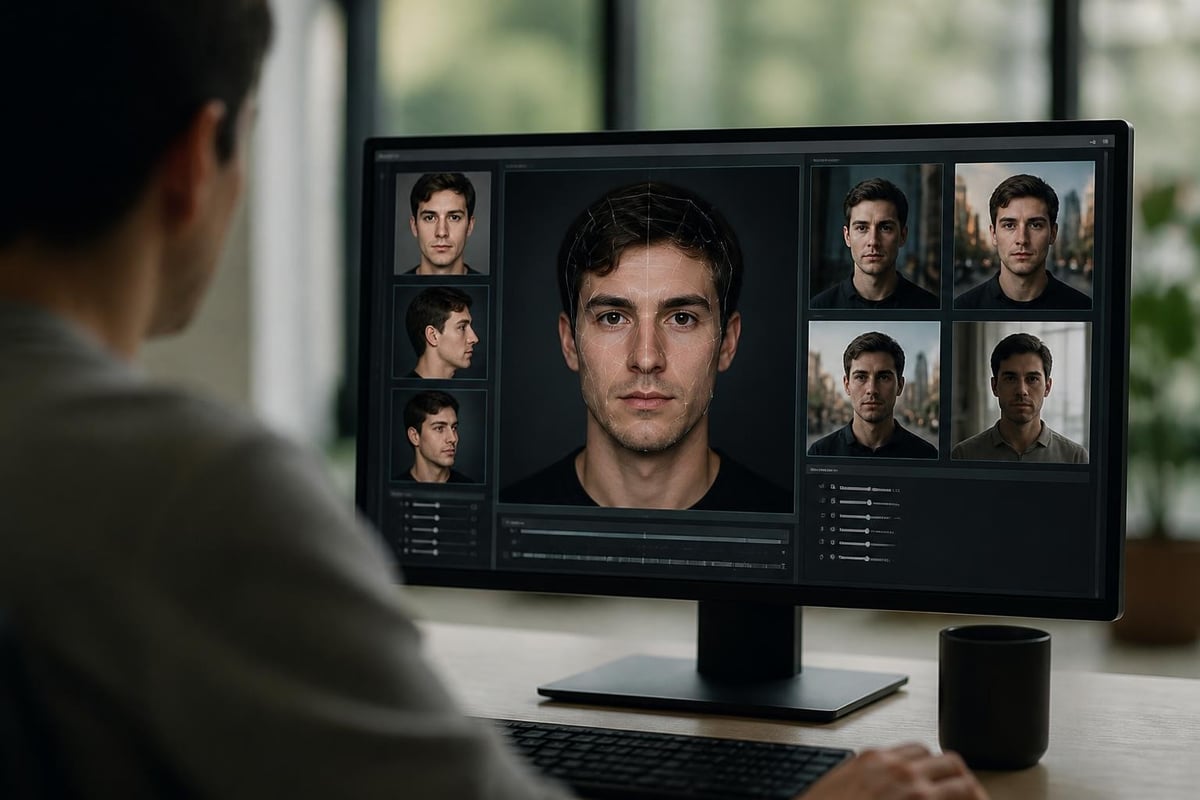
The evolution from generic AI portraits to true likeness preservation required fundamental architectural changes in how systems process reference images. Rather than treating your photo as inspiration for a generic face, modern approaches extract and encode your specific features as constraints that guide the generation process.
| Generation Approach | Identity Preservation | Scene Flexibility | Typical Use Case |
|---|---|---|---|
| Style Transfer | Low | Low | Artistic effects |
| Face Swap | Medium | Medium | Placing face in existing photo |
| Constrained Diffusion | High | High | New photos maintaining likeness |
| Feature Mapping | Very High | High | Professional headshots, dating profiles |
The most effective systems now use multi-stage pipelines that first extract detailed facial embeddings from your reference photos, then use those embeddings to constrain every generation step. This ensures that even as the AI composes you into a new environment or lighting scenario, your fundamental features remain intact.
How Reference Photos Train Personal Models
When you upload photos to create an ai realistic image, the system doesn't simply memorize those specific pictures. Instead, it learns a detailed representation of your unique features from multiple angles and expressions. This multi-view approach allows the AI to understand your face as a three-dimensional structure rather than a flat pattern.
The process typically requires 8-15 reference photos showing different angles, expressions, and lighting conditions. The system analyzes facial geometry, learns your natural expression range, maps skin characteristics, and identifies consistent features across all images.
This comprehensive analysis enables the AI to:
- Generate you from angles not present in reference photos
- Predict how your features appear under different lighting
- Place you in scenes while maintaining recognizability
- Preserve your natural asymmetries and unique characteristics
Services focused on maintaining your true appearance generate photos by treating your reference set as ground truth-the system's job is to place that specific person into new contexts, not to create an idealized or averaged version.
Real-World Applications Where Likeness Actually Matters
The practical value of an ai realistic image depends entirely on context. For creative projects, marketing campaigns, or artistic exploration, some departure from exact likeness might be acceptable or even desirable. For personal representation-dating profiles, professional networks, social media presence-maintaining recognizable identity becomes critical.
Professional Headshots and LinkedIn Presence
Professional contexts demand both technical polish and authentic representation. A LinkedIn headshot generated through AI should look professionally lit and composed while remaining immediately recognizable to colleagues who know you. The challenge here is balancing professional presentation standards with personal authenticity.
When someone connects with you online and then meets you in person, the continuity of identity matters. An ai realistic image that makes you look generically professional but not specifically like you creates confusion and erodes trust. The most effective professional headshots maintain your actual facial structure, natural skin texture, and characteristic expressions while providing the clean background and flattering lighting expected in business contexts.
Dating Profile Photos That Build Trust
Dating applications present perhaps the most stringent test for AI-generated photos. Matches evaluate authenticity carefully, and any hint of deception or over-editing triggers skepticism. The photos need to look like you on an actual good day, not like a generic attractive person who vaguely resembles you.
Research into synthetic media practices emphasizes transparency in personal contexts. When using AI-generated images for dating, the ethical approach maintains your true likeness while providing scene variety you might not have in your current photo collection. The goal is expanding your photo options, not creating a false representation.
Quality Evaluation: How to Assess AI Realistic Image Output
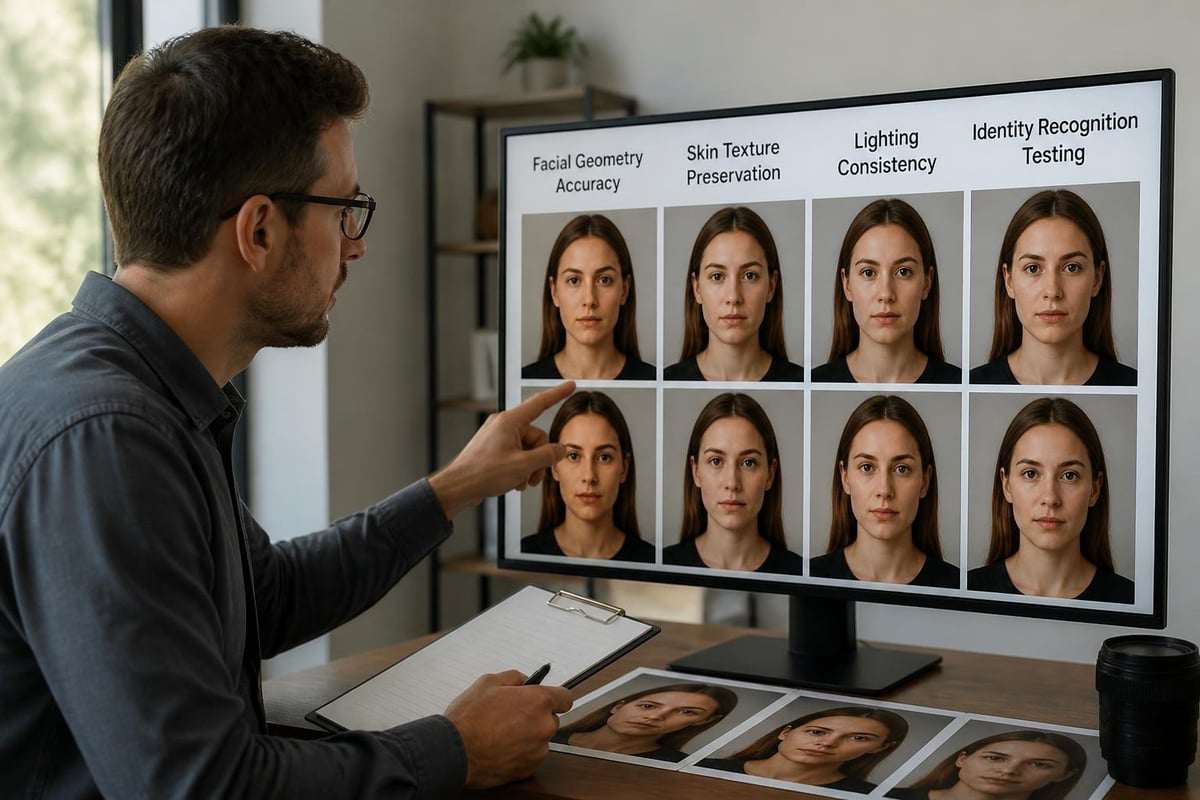
Evaluating whether an ai realistic image successfully preserves your identity requires systematic comparison against your reference photos. Professional assessment focuses on specific measurable elements rather than subjective impressions.
Objective Quality Metrics
| Evaluation Category | What to Check | Red Flags |
|---|---|---|
| Facial Geometry | Alignment of eyes, nose, mouth proportions | Features appear averaged or smoothed |
| Skin Texture | Natural pores, freckles, characteristic marks | Overly smooth or plastic-looking skin |
| Expression Authenticity | Natural muscle activation patterns | Forced or unnatural smiles |
| Lighting Consistency | Shadows match face structure | Lighting doesn't follow facial contours |
| Background Integration | Natural depth and perspective | Halo effects or edge artifacts |
The technical evaluation of photorealistic synthesis provides frameworks for assessing both perceptual quality and identity preservation. However, the most reliable test remains simple: show the generated image to people who know you well and ask if they immediately recognize you.
The "Friend Recognition Test"
Before using AI-generated photos in any professional or social context, validate them through informal testing. Share candidates with close friends or colleagues who know your face well, without explaining they're AI-generated. Their immediate reactions provide valuable data about whether the images successfully preserve your likeness.
If friends hesitate, squint, or say things like "that kind of looks like you," the identity preservation has failed. Successful ai realistic image generation produces immediate recognition-the same reaction people have when seeing an unfamiliar photo of you taken by someone else.
Ethical Considerations and Responsible Use
The capability to generate realistic photos of yourself raises questions that extend beyond technical quality. As UNESCO's framework on AI ethics emphasizes, synthetic media requires thoughtful consideration of transparency, consent, and authentic representation.
Core ethical principles for personal AI photos:
- Transparency: Disclosing when images are AI-generated in contexts where it matters
- Accuracy: Maintaining true likeness rather than creating aspirational versions
- Context appropriateness: Understanding where AI photos enhance vs. undermine trust
- Control: Ensuring you maintain ownership of your likeness and generated outputs
The distinction between enhancement and deception matters significantly. Using AI to place yourself in scenes you haven't visited-travel backgrounds, interesting locations, professional settings-operates differently than using AI to make yourself look substantially different. The first expands your photo collection; the second misrepresents your appearance.
Disclosure and Context
Dating contexts and professional networking create different expectations around photo authenticity. While both value accurate representation, the disclosure threshold differs. For many people, showing yourself in AI-generated scenes feels acceptable when your face remains unchanged, but generating substantially altered versions of yourself crosses into misrepresentation.
Understanding how generative AI can be misused helps establish personal guidelines. The goal with ai realistic image technology should be expanding authentic representation, not creating fictional versions of yourself.
Technical Advances Driving 2026 Capabilities
The dramatic improvement in identity-preserving AI photos stems from several converging technical developments that matured between 2024 and 2026. These advances allow systems to maintain subject likeness while generating diverse, contextually appropriate images.
Modern text-to-image generation and editing techniques have evolved to support fine-grained identity control. Rather than generating from text prompts alone, current systems accept both textual scene descriptions and detailed facial embeddings that constrain the output to match specific individuals.
Multi-Modal Conditioning Pipelines
The key breakthrough enabling better ai realistic image generation is multi-modal conditioning-systems that simultaneously process text descriptions, reference facial encodings, pose specifications, and style parameters. This allows precise control over scene and environment while maintaining strict identity preservation.
Current generation pipelines typically include:
- Reference encoding: Extract detailed facial identity from uploaded photos
- Scene composition: Define environment, lighting, and context through text or selection
- Pose specification: Determine body position and facial angle
- Identity-constrained generation: Synthesize image maintaining encoded facial features
- Refinement: Enhance photorealism while preserving identity markers
This multi-stage approach ensures that creative control over scene and context doesn't compromise the accuracy of your facial representation. Services like CMeIn Ai photos leverage this architecture to maintain your exact likeness across diverse scenes and settings.

Practical Workflow for Generating Personal Photos
Actually using AI to create photos that look like you requires more than just uploading a selfie. The quality of your input directly determines the success of identity preservation in outputs. A systematic approach to reference photo selection and system interaction produces consistently recognizable results.
Preparing Effective Reference Photos
The foundation of any successful ai realistic image generation is a strong reference set. These aren't photos you're trying to recreate-they're training examples that teach the AI what you actually look like across different conditions.
Ideal reference photo characteristics:
- Angle diversity: Front view, 45-degree angles, profile shots
- Expression variety: Neutral, slight smile, natural laugh
-
- Lighting variation: Soft indoor, natural outdoor, different times of day
- Recent accuracy: Photos from the past year that show your current appearance
- Clear focus: Sharp images where your facial features are clearly defined
- Minimal occlusion: Avoid sunglasses, hands covering face, or dramatic shadows
A diverse reference set allows the AI to learn your consistent features while understanding natural variation. This teaches the system what remains constant across conditions (your actual bone structure, eye shape, facial proportions) versus what changes with expression and lighting.
Selecting Appropriate Generation Contexts
Once the system understands your likeness, choosing appropriate contexts for generated photos requires thinking about your actual needs. An ai realistic image serves specific purposes-expanding your photo collection for dating profiles, creating professional headshots, or providing social media variety.
The most useful generated photos place you in scenarios that are plausible for your lifestyle but difficult to photograph naturally. A clean professional headshot with studio lighting, a travel photo in a location you've visited (but lack good photos from), or a well-composed outdoor portrait in flattering light all represent practical applications.
Less effective uses attempt to create photos of you doing things completely inconsistent with your actual life. The goal is authentic expansion of your photo collection, not fantasy fulfillment. Photos should feel like moments you could have captured naturally but didn't.
Common Failures and How to Avoid Them
Even with sophisticated technology, ai realistic image generation can fail in recognizable patterns. Understanding these failure modes helps you evaluate outputs critically and provide better input for successful results.
| Failure Type | Visual Symptom | Typical Cause | Solution |
|---|---|---|---|
| Generic Face | Looks attractive but not specifically like you | Insufficient reference diversity | Add more varied reference angles |
| Uncanny Valley | Almost right but subtly wrong | Poor lighting consistency | Check that scene lighting matches face structure |
| Expression Mismatch | Smile or expression looks forced | Limited expression examples | Include varied natural expressions in references |
| Age Inconsistency | Generated photo looks older/younger | Reference photos span too many years | Use recent photos from similar time period |
The Retouching Trap
One of the most common mistakes in AI photo generation is excessive smoothing or beautification that undermines authentic representation. While some systems default to "improvement" of facial features, this directly conflicts with the goal of maintaining true likeness.
An ai realistic image that makes your skin unnaturally smooth, enlarges your eyes, or subtly reshapes your face might look technically impressive but fails the fundamental test: it doesn't look like you. Friends won't recognize you, and anyone meeting you after seeing such photos will experience a disconnect.
The most effective approach maintains your actual skin texture, including natural pores, lines, and characteristics that define your real appearance. Your goal should be flattering lighting and composition, not facial restructuring.
Integration with Photography Workflow
AI-generated photos work best as supplements to traditional photography, not replacements. A balanced personal photo collection includes both naturally captured moments and strategically generated additions that fill specific gaps.
When Traditional Photography Works Better
Certain types of photos resist AI generation because they depend on authentic moments, genuine interaction, or complex environmental storytelling. Candid moments with friends, action shots during activities, photos showing genuine emotion during events-these capture reality in ways AI cannot replicate.
Traditional photography also provides the essential reference material that makes AI generation possible. Your naturally captured photos teach the AI what you actually look like, how you naturally pose, and how your features appear across real situations.
When AI Generation Adds Value
AI excels at creating photos you need but cannot easily capture: professional headshots without hiring a photographer, well-composed solo portraits without awkward selfie angles, or yourself in good lighting conditions you don't often encounter naturally. An ai realistic image fills practical gaps in your photo inventory without requiring extensive photoshoots.
For platforms requiring multiple high-quality photos-dating profiles, professional networks, personal websites-AI generation provides variety while maintaining consistent quality and authentic representation. Rather than relying on the three professionally photographed moments in your life, you can present yourself across diverse contexts while preserving your true appearance.
Future Developments and Emerging Capabilities
The trajectory of ai realistic image technology points toward increasing personalization and control. As systems better understand individual facial structure and characteristic expressions, generation will become more precise and authentic.
Emerging capabilities include real-time pose adjustment within existing photos, maintaining your face while changing only body position or angle; dynamic lighting control that shows how you'd appear under different lighting scenarios; and expression transfer that applies your natural smile patterns to various generated contexts.
Near-term advances expected in 2027:
- Single reference photo systems that extract 3D facial structure from minimal input
- Fine-grained expression control matching your specific smile and natural reactions
- Contextual consistency ensuring generated photos match your actual age and current appearance
- Better clothing and style integration that matches your actual wardrobe preferences
These advances will make ai realistic image generation even more accessible while maintaining the critical requirement: the photos must actually look like you.
The value of AI-generated photography ultimately depends on maintaining authentic representation while expanding your visual options beyond what traditional photography makes practical. As the technology matures, the core challenge remains unchanged: creating images that are both technically excellent and genuinely recognizable as you. CMeIn solves this by focusing on identity preservation above all else-your face, your skin, your actual appearance placed into scenes that enhance rather than replace your authentic self-representation. Whether you need professional headshots, dating profile variety, or social media photos that feel natural, the goal is always photos that look exactly like you.