How Artificial Intelligence Creates Images in 2026
The way artificial intelligence creates images has fundamentally changed how we produce visual content. From professional photographers to social media users, AI-powered image generation has become an essential tool for creating personalized, realistic photos without traditional cameras or studios. This technology processes reference images and text instructions to generate new visuals that maintain specific characteristics while placing subjects in entirely new contexts and environments.
Understanding How AI Image Generation Works
Artificial intelligence creates images through a process called diffusion modeling, which has emerged as the dominant approach in 2026. These models learn patterns from millions of existing photographs, understanding how objects, people, and scenes typically appear. According to recent research on diffusion models, the technology works by gradually removing noise from random data until a coherent image emerges.
The Training Process Behind AI Image Generators
Training an AI image generator requires exposing the model to vast datasets of photographs paired with descriptive text. The system learns correlations between visual elements and their textual descriptions. This training enables the AI to understand concepts like "outdoor portrait in natural lighting" or "professional headshot with neutral background."
The quality of training data directly impacts output quality. Models trained on high-resolution, diverse photographs produce more realistic results than those trained on limited datasets.
Key Technologies Powering AI Image Creation
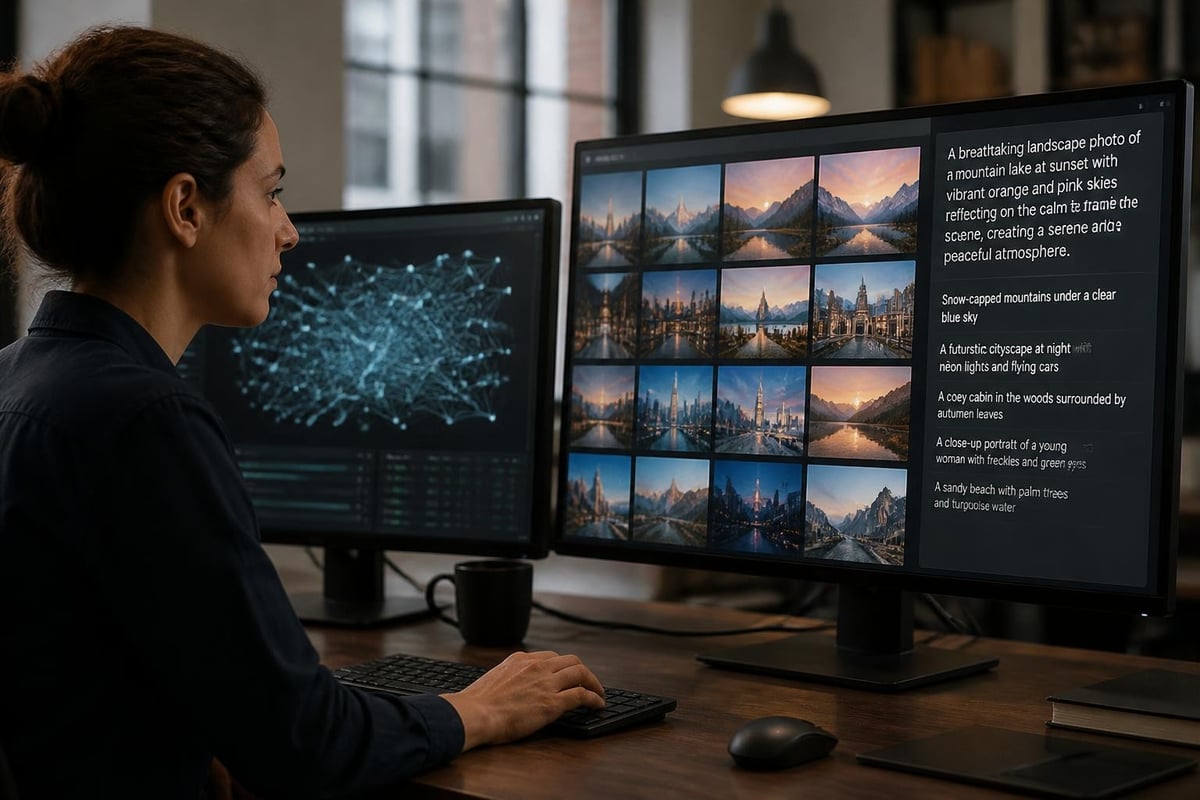
Several technical approaches enable artificial intelligence creates images with increasing realism and control.
Diffusion Models and Noise Reduction
Diffusion models start with pure noise and gradually refine it into a structured image. Google Research has explored how this iterative process allows for creative image generation while maintaining coherence. Each step removes a small amount of noise while adding detail based on learned patterns.
- Forward diffusion: Gradually adds noise to training images
- Reverse diffusion: Learns to remove noise and recover image details
- Conditioning: Guides the process using text prompts or reference images
- Sampling: Controls the randomness and variation in outputs
Text-to-Image Synthesis Advances
Recent surveys of text-to-image synthesis highlight multiple model architectures working in parallel. Transformer networks process text descriptions, while convolutional networks handle spatial relationships in images. This combination allows for precise control over generated content.
| Model Component | Function | Impact on Output |
|---|---|---|
| Text encoder | Interprets instructions | Accuracy of concept representation |
| Latent space | Compresses image information | Generation speed and efficiency |
| U-Net architecture | Adds/removes detail | Image quality and resolution |
| Attention mechanisms | Focuses on specific elements | Precision of requested features |
Practical Applications in Photography and Personal Branding
The ability of artificial intelligence creates images has practical implications for individuals building their online presence. Traditional photography requires coordinating locations, lighting, equipment, and schedules. AI generation offers an alternative that maintains your likeness while placing you in different contexts.
Creating Consistent Personal Images
For professionals needing photos across multiple platforms, AI generation ensures visual consistency. AI-generated LinkedIn photos maintain the same face and basic appearance while varying backgrounds and contexts. This consistency strengthens personal branding without requiring multiple photo sessions.
The technology analyzes reference photos to understand your facial structure, typical expressions, and proportions. It then recreates these characteristics in new contexts while preserving what makes you recognizable.
Dating Profile and Social Media Photography
One significant use case involves creating dating profile photos that feel authentic. When artificial intelligence creates images for this purpose, the goal isn't perfection but authenticity. The CMeIn service focuses on generating realistic AI photos that maintain your actual appearance without retouching, offering images that represent you accurately in various environments. This approach prioritizes recognition and relatability over artificial enhancement.
Traditional dating photography advice emphasizes hiring photographers and scouting locations. AI generation offers an alternative that keeps your face identical to real life while varying the context and composition.
Technical Requirements for Quality Results
Not all AI image generation produces equivalent results. Several factors determine whether artificial intelligence creates images that meet specific needs.
Reference Photo Quality and Variety
- Resolution: Higher-resolution reference photos provide more facial detail
- Lighting diversity: Multiple lighting conditions help the AI understand your appearance
- Angle variation: Different perspectives improve the model's understanding of your face structure
- Expression range: Various expressions enable more natural-looking generated photos
Model Specificity and Fine-Tuning
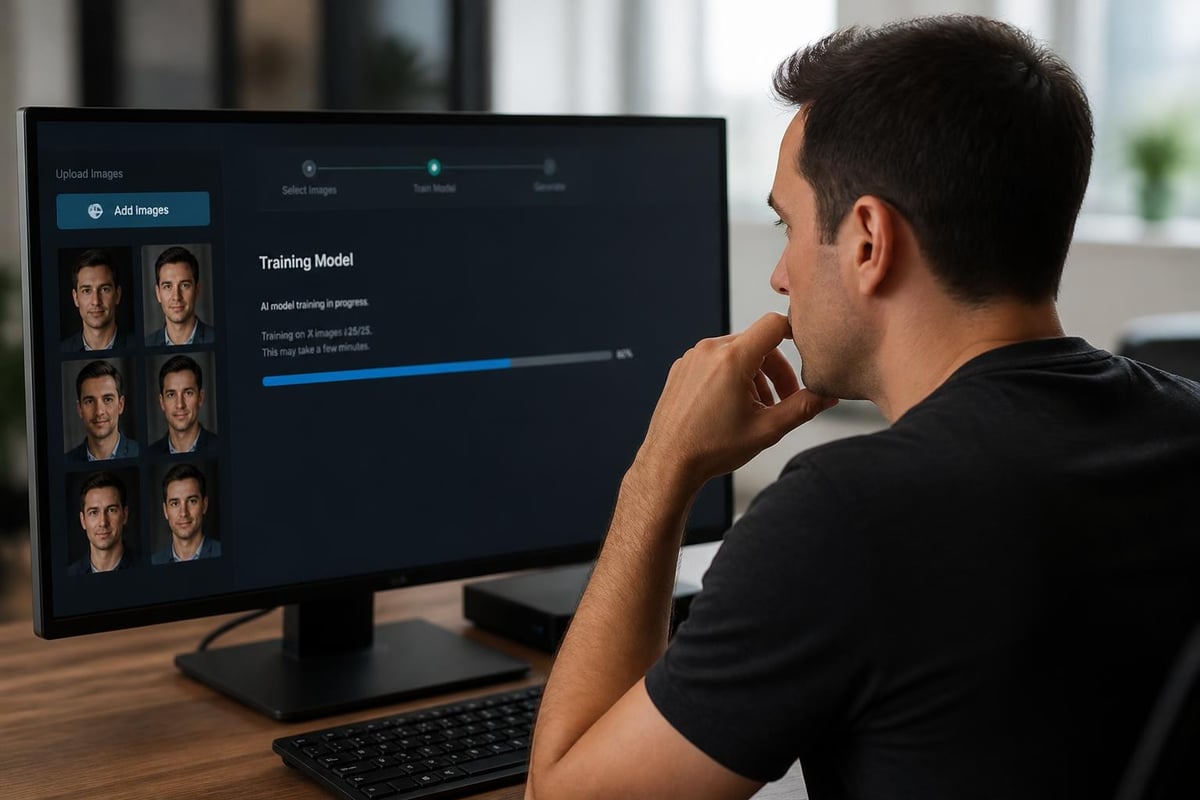
Generic image generators produce generic results. Personalized models trained on your specific photos produce images that actually look like you. This fine-tuning process creates a custom model that understands your unique features rather than approximating them with similar-looking elements from its training data.
The difference between generic and personalized approaches becomes obvious in the final output. Generic systems might create someone who resembles you superficially. Personalized systems recreate your specific facial structure, proportions, and characteristics.
Ethical Considerations and Content Authentication
As artificial intelligence creates images with increasing realism, distinguishing generated content from traditional photography becomes crucial. Several technical and policy approaches address this challenge.
Content Provenance and Watermarking
The C2PA specification establishes standards for marking digital content with provenance information. This technical framework embeds metadata indicating how an image was created, whether through traditional photography or AI generation.
Research into invisible watermarking explores methods for embedding persistent markers in AI-generated images. These watermarks survive common image manipulations like compression and resizing, enabling later verification of image origin.
Copyright and Ownership Questions
The U.S. Copyright Office has provided guidance on copyright issues surrounding AI-generated content. Current interpretations suggest that while AI systems learn from existing images, the specific outputs constitute new works. However, ownership rights depend on factors like human creative input and the specific generation process.
For individuals using AI to create personal photos, copyright concerns differ from commercial or artistic use cases. Personal photos generated from your own reference images generally belong to you, though specific service terms may vary.
Industry Standards and Media Guidelines
Professional media organizations have established guidelines for when and how artificial intelligence creates images in journalistic contexts. Reuters maintains standards requiring clear disclosure when AI-generated imagery appears in news coverage.
These standards reflect broader concerns about maintaining trust when generated images become indistinguishable from traditional photographs. Transparency serves as the primary mechanism for preventing deception.
| Context | Disclosure Requirement | Rationale |
|---|---|---|
| Journalism | Mandatory labeling | Maintaining editorial credibility |
| Commercial advertising | Varies by jurisdiction | Consumer protection regulations |
| Personal social media | Generally optional | User discretion and platform policies |
| Professional portfolios | Recommended disclosure | Professional ethics and client expectations |
Comparing AI Generation to Traditional Photography
When artificial intelligence creates images for personal use, how does the process compare to traditional photography?
Cost and Time Efficiency
Traditional photography requires:
- Finding and booking a photographer
- Coordinating schedules and locations
- Conducting the photo session
- Waiting for editing and delivery
- Potentially reshooting if results don't meet expectations
AI generation condenses this process into uploading reference photos and selecting desired contexts. The time investment drops from weeks to minutes. Cost differences are equally significant, with traditional sessions often requiring hundreds of dollars while AI services operate at a fraction of that expense.
Control and Iteration
Traditional photography provides limited iteration opportunities. Once a session ends, creating variations requires scheduling another shoot. When artificial intelligence creates images, iteration becomes trivial. Testing different backgrounds, clothing, or contexts requires only new generation requests rather than new photo sessions.
This flexibility particularly benefits those building profiles across multiple platforms. Dating profile photos might emphasize casual, approachable contexts, while professional headshots require formal backgrounds. Creating both from the same reference photos provides consistency across different personal brands.
Technical Challenges and Limitations
Despite advances in how artificial intelligence creates images, several technical challenges persist in 2026.
Maintaining Photographic Authenticity
Generated images sometimes exhibit subtle artifacts that signal their synthetic origin. These might include:
- Inconsistent lighting physics across different image regions
- Unnatural smoothness in skin textures
- Minor anatomical irregularities in hands or complex poses
- Background elements that don't follow perspective rules correctly
Quality AI generation systems minimize these issues through better training data and model architectures. Understanding how to make AI photos look real involves recognizing these potential problems and choosing services that address them.
Preserving Individual Characteristics
When artificial intelligence creates images of specific individuals, maintaining precise likeness presents ongoing challenges. Generic models might approximate your appearance but miss the subtle details that make you recognizable to people who know you. Eye shape, smile patterns, and proportional relationships between facial features all contribute to recognition.
Specialized services address this by training custom models on your reference photos specifically. This personalization ensures the AI understands your unique characteristics rather than approximating them with statistical averages.
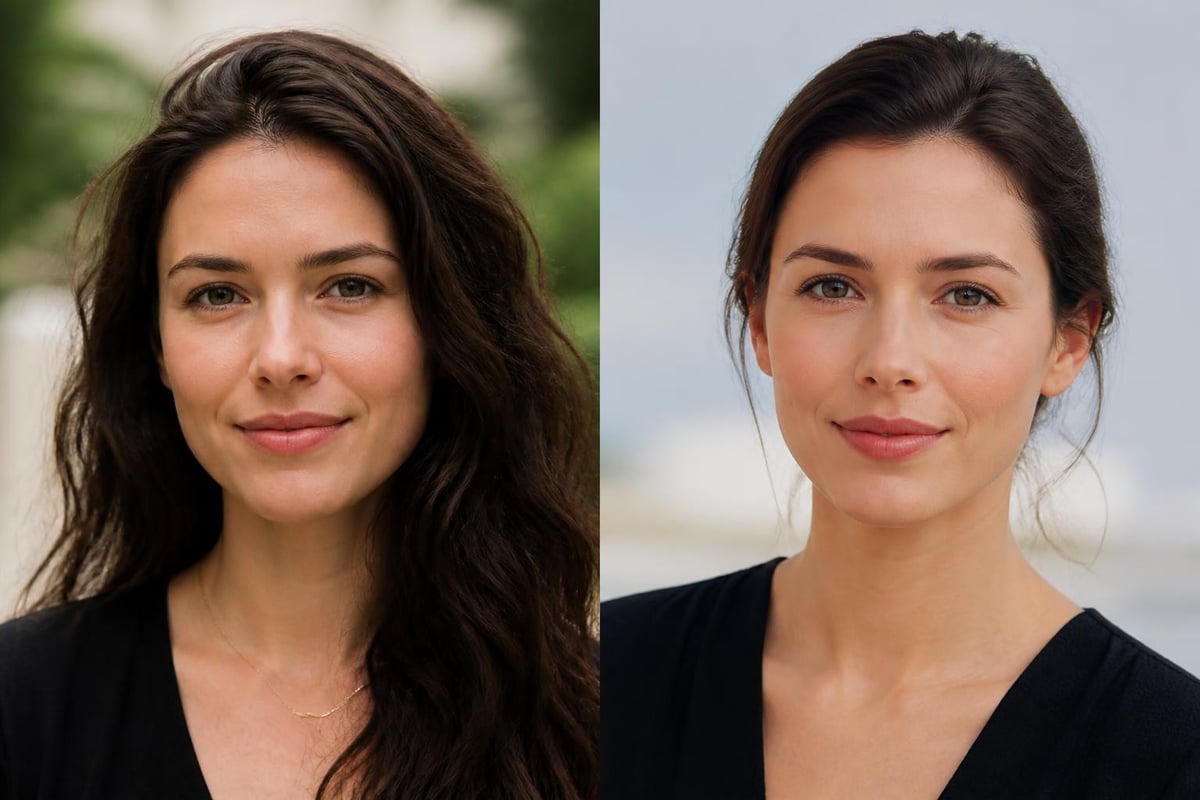
Future Developments in AI Image Generation
The trajectory of how artificial intelligence creates images suggests several developments emerging beyond 2026.
Improved Control Mechanisms
Current systems accept text prompts and reference images as input. Emerging interfaces will offer more granular control over specific attributes. Adjusting exact pose angles, precise lighting directions, or specific emotional expressions will become as simple as moving sliders rather than crafting detailed text descriptions.
Real-Time Generation and Editing
Processing speed improvements will enable interactive editing where changes appear immediately. This real-time feedback transforms the creative process, allowing users to refine results through direct manipulation rather than iterative generation cycles.
Integration with Existing Photo Libraries
Future systems will better integrate with your existing photo collections. Rather than treating each generation as isolated, AI will understand your photo history and maintain consistency across all your images. This contextual awareness will ensure that new generated photos feel like natural additions to your visual story.
Choosing AI Photo Generation Services
Not all services that use artificial intelligence creates images offer equivalent quality or approaches. Several factors distinguish services focused on maintaining authenticity from those prioritizing aesthetic enhancement.
Likeness Preservation vs. Enhancement
Some services emphasize making you look better through digital retouching and enhancement. Others prioritize making you look like yourself. AI photos for women, for example, might focus on representing actual appearance rather than conforming to idealized standards.
The choice depends on your goals. Enhanced images might work for certain creative projects, but authentic representation matters more for contexts where recognition is essential. Dating profiles, professional networks, and social media benefit from photos that look genuinely like you.
Customization and Scene Variety
The range of available contexts and scenes varies significantly across services. Basic generators might offer limited backgrounds and poses. Comprehensive services provide diverse scenes matching different personal brands and use cases. Consider whether you need:
- Professional headshots with neutral backgrounds
- Casual outdoor scenes
- Social situations and activities
- Travel and location-specific contexts
- Hobby and interest-related settings
Privacy and Data Handling
When you provide reference photos for artificial intelligence creates images services, understanding data handling becomes important.
Reference Photo Storage and Usage
Reputable services clearly explain how they store and use your reference photos. Key questions include:
- How long are reference photos retained?
- Are photos used to train general models or only personalized ones?
- Can you request deletion of your data?
- Are photos shared with third parties?
Services focused on personalized generation typically retain your photos only for creating your custom model. This differs from platforms that might use submitted photos to improve their general training datasets.
Generated Image Rights
Ownership of generated images varies by service terms. Most consumer-focused platforms grant you full rights to images generated from your reference photos. Commercial or enterprise services may have different arrangements. Review terms before submitting photos to understand what rights you retain.
Artificial intelligence creates images by learning from reference photos and applying that understanding to new contexts, offering a practical alternative to traditional photography for personal branding and online presence. When authenticity matters as much as variety, specialized services that maintain your actual appearance deliver better results than generic enhancement tools. CMeIn generates realistic AI photos using your reference images to create scenes across dating profiles, social media, and professional contexts while preserving your likeness exactly as you are.