What it says"I exist, and I own a blazer.""This is what I do, and this is what I look like doing it."
Your faceImproved: smoother, narrower, a few years off. Colleagues notice the gap.Kept. The people who see it most already know your face, and it has to match.
The settingGrey gradient or a blurred office that is nobody's office.A whiteboard, a meeting room, a stage, a lobby. Rooms with the work in them.
How manyOne portrait, used everywhere until it goes stale.A set: profile, banner, posts, Featured, bios. Each from the same two phone photos.
Where it winsThe company directory, where every photo has to match the others.Everywhere else on LinkedIn, and every bio page that is not a directory.
Paying for itA pack of near-identical portraits, or a subscription.Credit packs from $2.99. 300 credits a photo, nothing recurring.
For a company directory, where every photo has to match the others, a headshot is still the right answer. We say so at length.







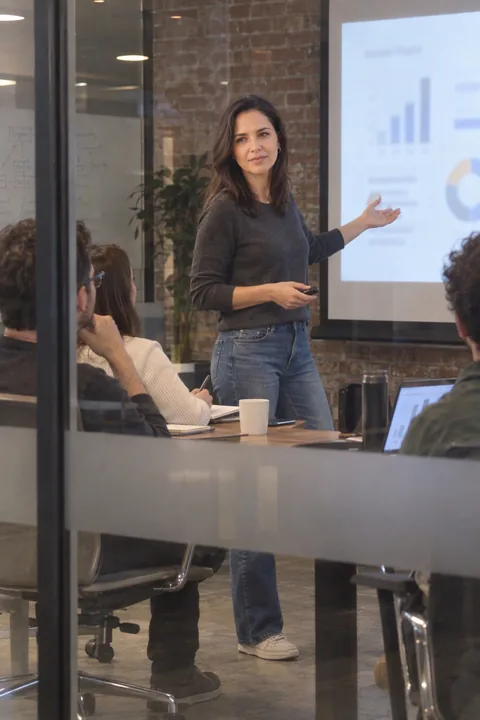


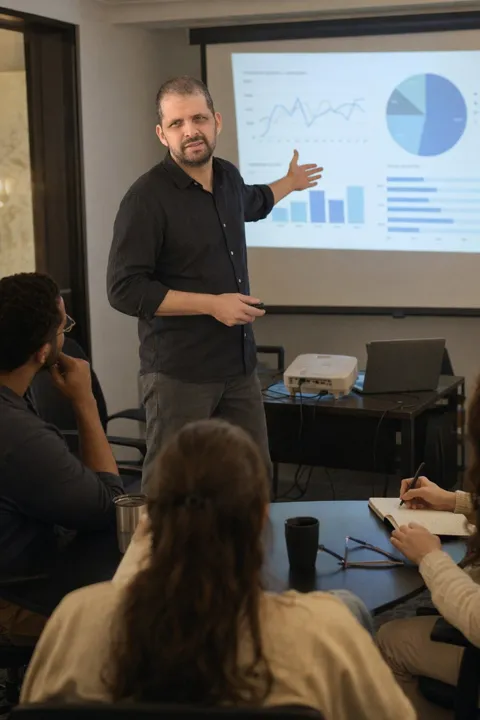


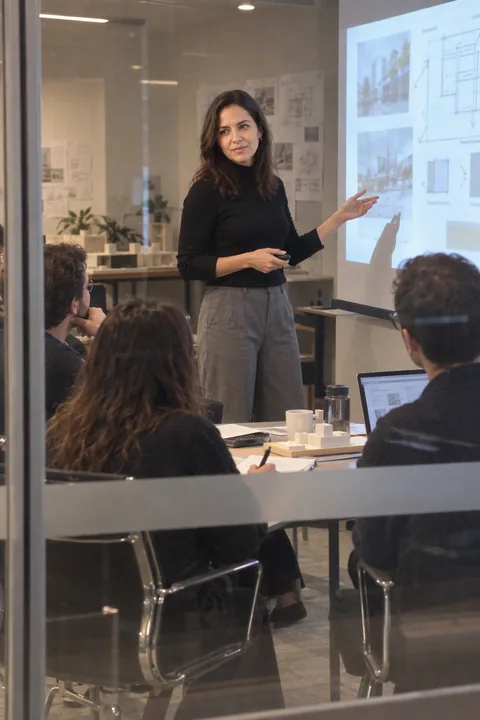





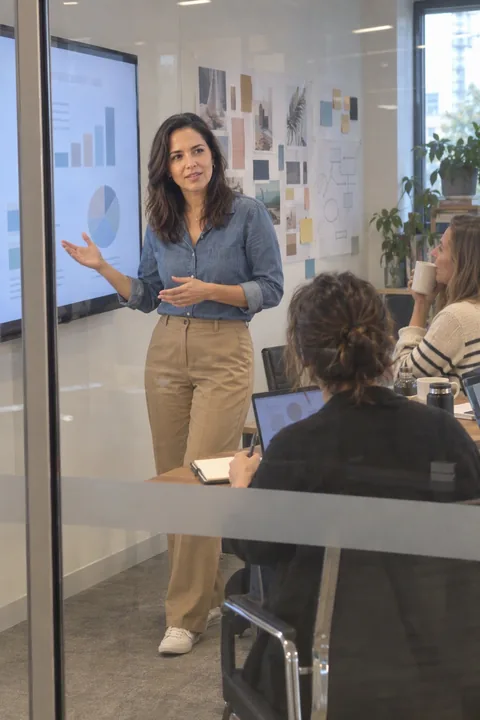




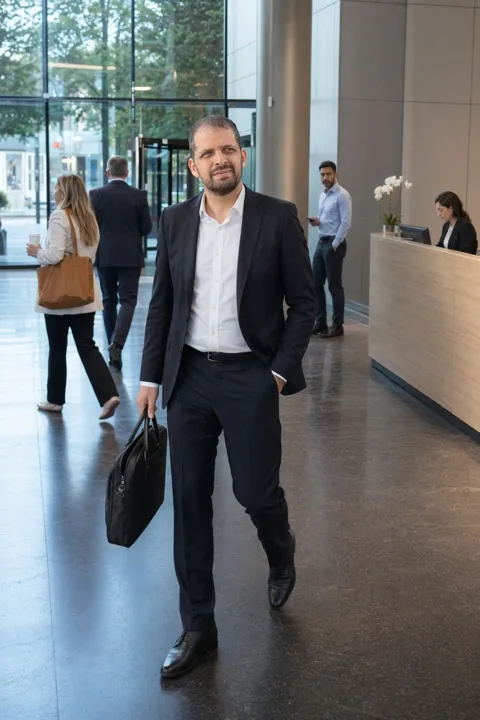

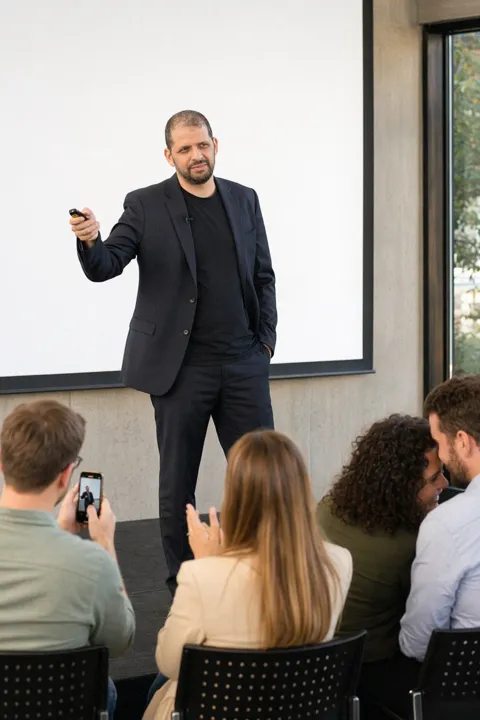





The room is the credential
A portrait has nobody else in it, so it cannot show you leading anything. A photo of you mid-sentence with a team turned towards you does, without a caption. That is social composition applied to work:
Every business scene is composed this way before you choose it. Why social composition works.
Colleagues in the frame, you holding it. A banner that shows the job instead of a blue rectangle.
See the set