Selfies AI: The Complete Guide to AI-Generated Photos
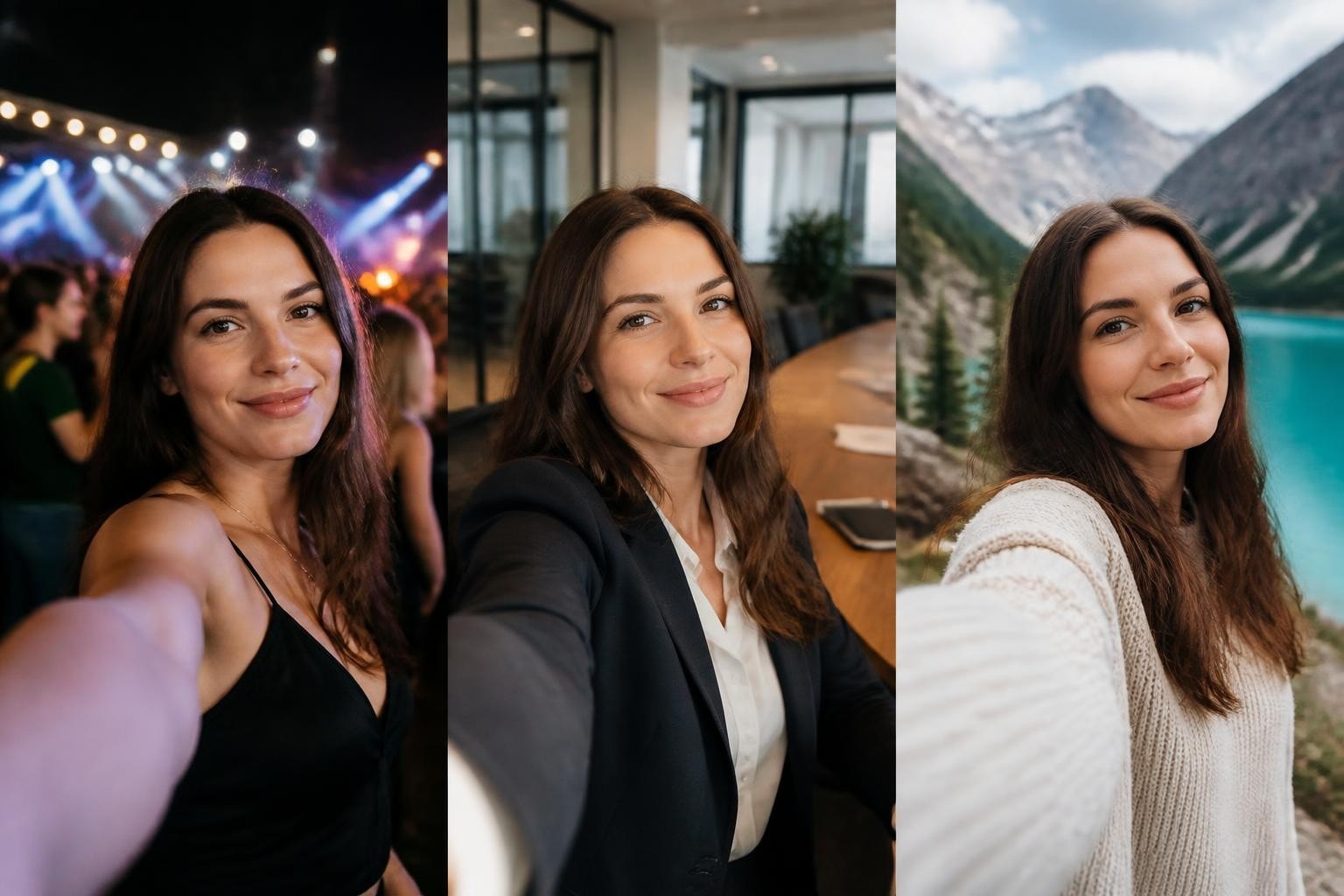
The explosion of selfies ai technology has fundamentally changed how we present ourselves online. By 2026, artificial intelligence has evolved beyond simple filters and face-tuning apps to create entirely new photographs that maintain your exact likeness while placing you in scenes you've never visited. This shift represents more than a technological novelty-it addresses a practical challenge millions face: generating authentic-looking photos without the time, expense, or skill required for traditional photography.
Understanding Selfies AI Technology
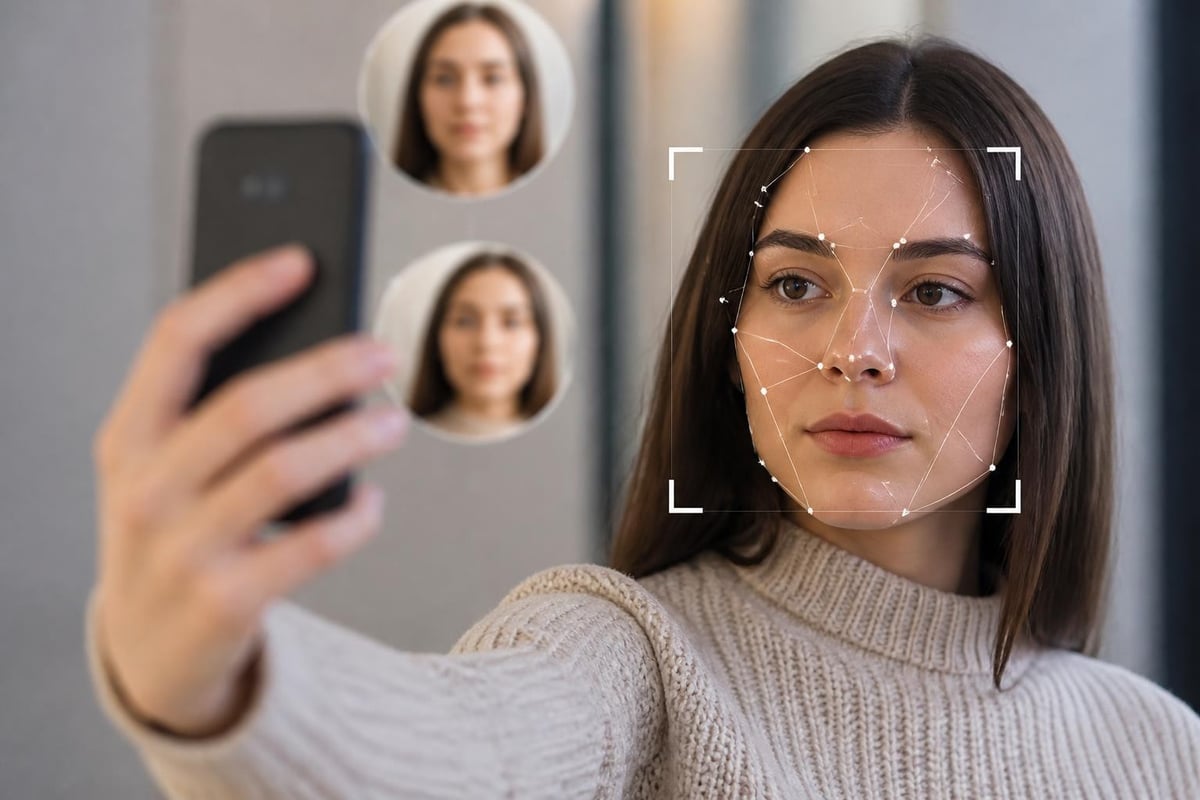
Selfies ai systems work by analyzing your facial features, skin texture, and unique characteristics from reference photos. Unlike earlier face-swapping apps that produced obvious manipulations, modern AI-generated imagery preserves your identity with remarkable precision.
The Technical Foundation
The technology relies on neural networks trained on millions of images to understand how faces appear under different lighting conditions, angles, and contexts. When you upload your photos, the system:
- Maps your facial structure and proportions
- Identifies skin tone, texture, and distinctive features
- Learns how your face appears from multiple angles
- Applies this understanding to generate new scenarios
Key difference from filters: Traditional filters modify existing photos. Selfies ai creates entirely new images while maintaining your recognizable features.
Quality Indicators
| Feature | Traditional Photography | Selfies AI | Simple Filters |
|---|---|---|---|
| Likeness accuracy | 100% (it's you) | 90-95% when done well | 60-70% |
| Scene flexibility | Limited by location | Unlimited scenarios | None (edits only) |
| Time investment | Hours to days | Minutes | Seconds |
| Cost per image | $50-500+ | $1-10 | Free to $5 |
| Natural appearance | Always natural | Very high when quality service | Often obvious |
The best selfies ai services focus on maintaining authenticity rather than creating idealized versions. This approach proves especially valuable when you need consistent, professional imagery across platforms without retouching that makes you unrecognizable in person.
Applications Across Digital Platforms
Social media and professional platforms increasingly demand varied, high-quality imagery. Selfies ai addresses this need across multiple contexts.
Dating Profile Photography
Dating profiles require diverse photos showing personality and lifestyle. Yet most people lack professional photos of themselves hiking, at social events, or in flattering everyday moments. AI dating photos solve this by generating realistic images in these scenarios.
For dating contexts specifically, the technology helps users present authentic versions of themselves in situations that communicate personality and interests. Rather than using obviously staged studio shots or low-quality bathroom selfies, you gain access to natural-looking photos that appear candid.
CMeIn's approach focuses on maintaining your actual appearance without artificial enhancement, ensuring that first dates don't involve the awkwardness of looking significantly different from your photos. When you upload reference images, the system generates photos of you in various social and lifestyle contexts while preserving the face, skin, and features that make you recognizable.

Professional and LinkedIn Presence
Professional networks demand polished imagery, yet many professionals struggle with appropriate headshots. The headshot generation capability within selfies ai creates clean, professional images suitable for LinkedIn, company directories, and conference materials.
Professional photo requirements:
- Neutral background that doesn't distract
- Appropriate attire for your industry
- Confident, approachable expression
- Proper lighting that flatters without looking artificial
- Consistency across platforms
Research on perceptions of AI-generated profile pictures reveals that viewers rate well-executed AI photos similarly to traditional photography when the images maintain natural appearance and avoid over-idealization.
Social Media Consistency
Instagram, Facebook, and other platforms reward consistent posting. Selfies ai enables this by generating varied content without requiring constant photoshoots. You can populate feeds with images showing different environments and scenarios while maintaining recognizable authenticity.
Privacy and Ethical Considerations
The democratization of image generation brings significant privacy implications. International data protection authorities have issued joint statements on privacy risks of AI-generated imagery, highlighting concerns about consent, data retention, and potential misuse.
Choosing Ethical Services
When selecting selfies ai providers, examine their data practices:
- Storage duration: How long do they retain your reference photos?
- Usage rights: Can they use your images for training or marketing?
- Data protection: What security measures protect your biometric data?
- Deletion policies: Can you remove your data completely?
The Privacy International report on AI geolocation demonstrates how images contain metadata and contextual information that can reveal sensitive details about users, making vendor selection critical.
Transparency Requirements
Ethical selfies ai use includes disclosure when appropriate. While personal social media posts don't typically require labeling AI-generated images, professional contexts may demand transparency. Consider:
- Professional headshots on company websites
- Dating profiles (some platforms now require disclosure)
- Journalism or public communication
- Commercial applications
The Stanford AI Index Report documents increasing incidents of AI image misuse, reinforcing the importance of responsible deployment.
Quality Assessment and Selection
Not all selfies ai services produce equivalent results. Quality varies dramatically based on the underlying technology, training data, and service priorities.
Evaluation Criteria
| Assessment Factor | What to Look For | Red Flags |
|---|---|---|
| Likeness preservation | Face matches your reference photos | Over-smoothed or generic features |
| Skin texture | Natural texture maintained | Poreless, plastic appearance |
| Lighting consistency | Realistic light and shadow | Flat or contradictory lighting |
| Scene integration | You look naturally placed | Obvious compositing edges |
| Expression authenticity | Natural facial expressions | Uncanny or stiff expressions |
Testing approach: Start with a small batch. Compare results to your reference photos and assess whether someone who knows you would recognize the generated images as you.
Technical Indicators
Understanding deepfake generation methods helps identify quality services. Advanced systems use diffusion models and multi-modal training that preserve fine details while generating new contexts.
Look for services that:
- Require multiple reference photos from different angles
- Allow you to select specific scenarios or contexts
- Maintain consistent features across generated images
- Produce natural lighting and shadows
- Generate realistic fabric textures and environmental details
The goal is photos that represent you authentically in scenarios you haven't photographed, not idealized fantasies that create disconnects with reality.
Implementation Best Practices
Maximizing selfies ai results requires thoughtful reference photo selection and clear outcome expectations.
Reference Photo Selection
Your input images determine output quality. Provide the system with:
- Multiple angles: Front, three-quarter, and profile views
- Varied lighting: Different times of day and light sources
- Clear resolution: Sharp, well-focused images
- Natural expressions: Range of genuine expressions
- Minimal filters: Unedited photos preserve accurate features
Avoid: Heavily filtered images, extreme angles, poor lighting, or photos where your face is partially obscured.
Scenario Selection
Choose scenarios that align with your actual lifestyle and interests. AI profile picture generation works best when the contexts feel plausible for who you are.
Effective scenario categories:
- Social situations matching your actual interests
- Professional environments relevant to your field
- Casual everyday moments
- Hobby or activity-based settings
- Travel destinations (when appropriate for context)
The study on democratization of AI image generation emphasizes that believability stems from contextual coherence-scenarios that make sense for the individual portrayed.
Technical Advances and Future Directions
Selfies ai capabilities continue expanding as underlying technologies mature. Multi-modal detection research documented in recent arXiv surveys shows both the sophistication of generation methods and parallel advances in identifying synthetic content.
Current Capabilities
2026 systems now handle:
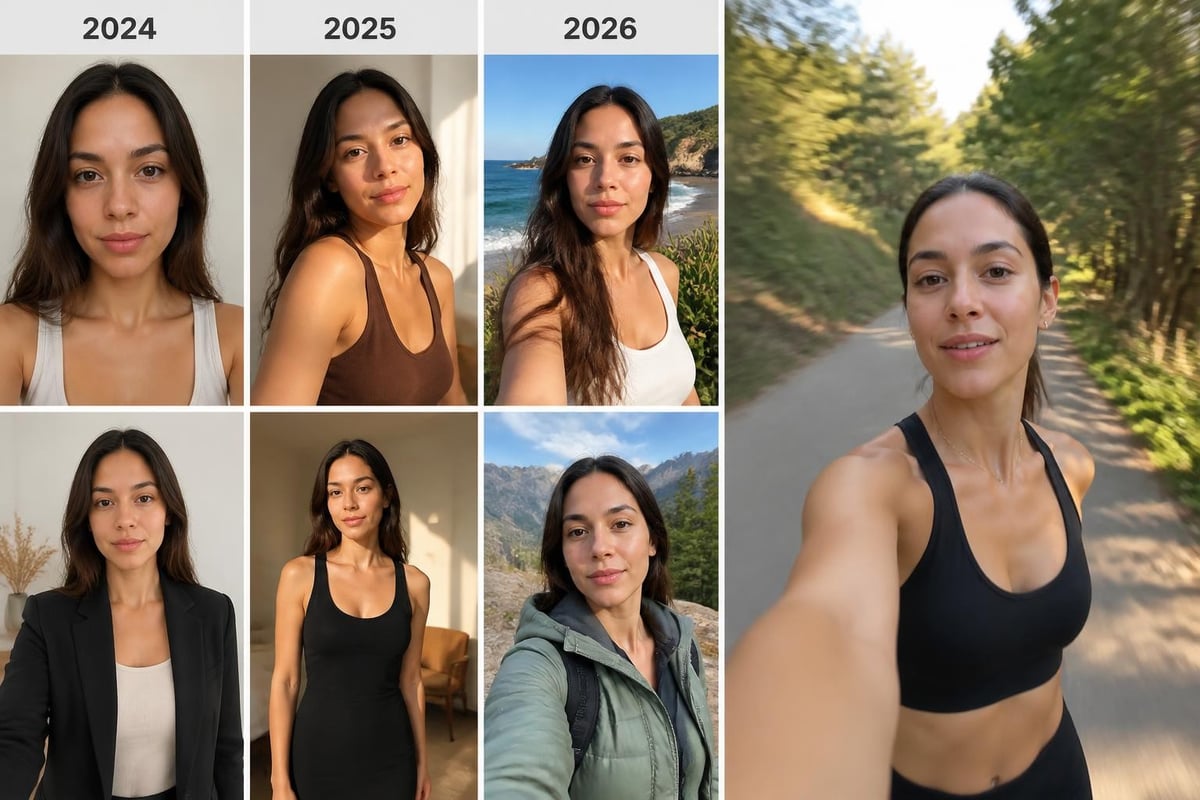
- Dynamic poses: Beyond static portraits to action and movement
- Environmental interaction: Realistic object handling and spatial awareness
- Clothing variation: Outfit changes while maintaining your face and pose
- Group compositions: Placing you naturally within social contexts
Services like pose maxing demonstrate how specific aspects of images can be modified while preserving others-adjusting your posture within an existing photo while keeping everything else intact.
Emerging Developments
The next generation of selfies ai will likely include:
- Video generation: Moving beyond stills to short video clips
- Real-time preview: Adjusting scenarios before final generation
- Enhanced control: Granular selection of environmental details
- Improved consistency: Better feature preservation across varied scenes
- Faster processing: Reduced generation time from minutes to seconds
These advances will further blur lines between traditional and AI-assisted photography, making quality and ethical practices even more critical.
Cost-Benefit Analysis
Investment in selfies ai services varies from free tools with limited quality to premium platforms offering professional results. Understanding the value proposition helps inform decisions.
Pricing Models
- Free tiers: Limited generations, lower quality, watermarks
- Pay-per-photo: $1-5 per image, suitable for occasional needs
- Subscription services: $10-50 monthly for regular users
- Premium packages: $100-300 for extensive libraries and priority processing
Compare this to traditional photography: Professional headshots typically cost $200-500 for a session yielding 5-10 final images. Dating profile photoshoots run $300-800. The economics favor selfies ai for users needing diverse imagery across multiple contexts.
Value Considerations
| Factor | Traditional Photography | Selfies AI |
|---|---|---|
| Initial investment | High ($200-500+) | Low ($10-100) |
| Image variety | Limited by shoot | Extensive scenarios |
| Update frequency | Requires new shoots | Generate as needed |
| Geographic flexibility | Travel required | Any location |
| Time commitment | Hours per session | Minutes per batch |
For professionals maintaining presence across LinkedIn and industry platforms, or individuals active on dating apps needing fresh profile photos, selfies ai offers compelling efficiency.
Integration With Existing Workflows
Selfies ai doesn't replace all photography-it supplements and enhances your existing image library. Strategic integration maximizes value.
Hybrid Approach
Combine traditional and AI-generated photos:
- Anchor with authentic photos: Use real photographs as primary profile images
- Fill gaps with AI: Generate scenarios you haven't captured
- Maintain consistency: Ensure AI photos match your current appearance
- Rotate regularly: Update both real and generated images periodically
This approach leverages selfies ai strengths while maintaining authentic representation. Check out examples of how this hybrid strategy appears across different platforms.
Platform-Specific Strategies
Different platforms demand different approaches:
LinkedIn and professional networks:
- Conservative AI headshots with neutral backgrounds
- Professional attire and environments
- Consistent style across company materials
Dating applications:
- Mix of authentic candid shots and AI lifestyle photos
- Varied scenarios showing interests and personality
- Natural expressions and realistic contexts
Social media:
- Greater creative flexibility
- Scenario variety to maintain feed interest
- Seasonal and event-specific generation
The key is matching selfies ai application to platform expectations and audience perceptions.
Addressing Common Concerns
Users approaching selfies ai often share specific hesitations worth addressing directly.
"Will people know it's AI?"
High-quality services produce images indistinguishable from traditional photography to casual viewers. The goal isn't deception-it's authentic representation in scenarios you haven't professionally photographed. When the technology preserves your actual features without enhancement, generated photos function as legitimate representations.
"What about when we meet in person?"
This concern primarily affects dating contexts. The solution is simple: use selfies ai that maintains your actual appearance rather than services that idealize or enhance. Tools focused on preserving likeness rather than improvement ensure consistency between photos and reality.
"Is my data safe?"
Data security varies by provider. Prioritize services with:
- Clear privacy policies
- Encrypted storage and transmission
- Limited data retention
- User-controlled deletion
- No third-party data sales
Review data deletion policies and privacy terms before uploading reference photos.
"How many reference photos do I need?"
Most quality services require 8-15 reference photos capturing different angles, expressions, and lighting conditions. More input photos generally produce better results, as the system learns your features more comprehensively.
Measuring Success
Effective selfies ai use produces measurable improvements in digital presence and engagement.
Performance Metrics
Track these indicators to assess value:
- Engagement rates: Likes, comments, and shares on social posts
- Profile views: Increases on LinkedIn or dating platforms
- Response rates: Dating app matches and message responses
- Professional inquiries: Contact from opportunities via LinkedIn
- Time savings: Hours not spent arranging photoshoots
Benchmark approach: Establish baseline metrics before implementing selfies ai, then measure changes over 30-60 days.
Quality Indicators
Beyond quantitative metrics, assess qualitative outcomes:
- Friends and colleagues recognize you in generated photos
- No disconnects between photos and in-person meetings
- Consistent personal brand across platforms
- Reduced photography-related stress and planning
- Confidence in your online presentation
Success means authentic representation that serves your goals without creating gaps between your digital and physical presence.
Selfies AI represents a practical evolution in personal photography, enabling authentic representation across digital platforms without constant professional photoshoots. The technology works best when it preserves your actual appearance while providing scenario flexibility, making it valuable for anyone maintaining active online presence. Whether you need fresh profile photos, consistent professional imagery, or diverse social content, CMeIn generates realistic photos that look exactly like you using your reference images, helping you present authentically across dating profiles, social media, and professional networks without retouching that makes you unrecognizable.