Photo Generated AI: A Professional Guide for 2026
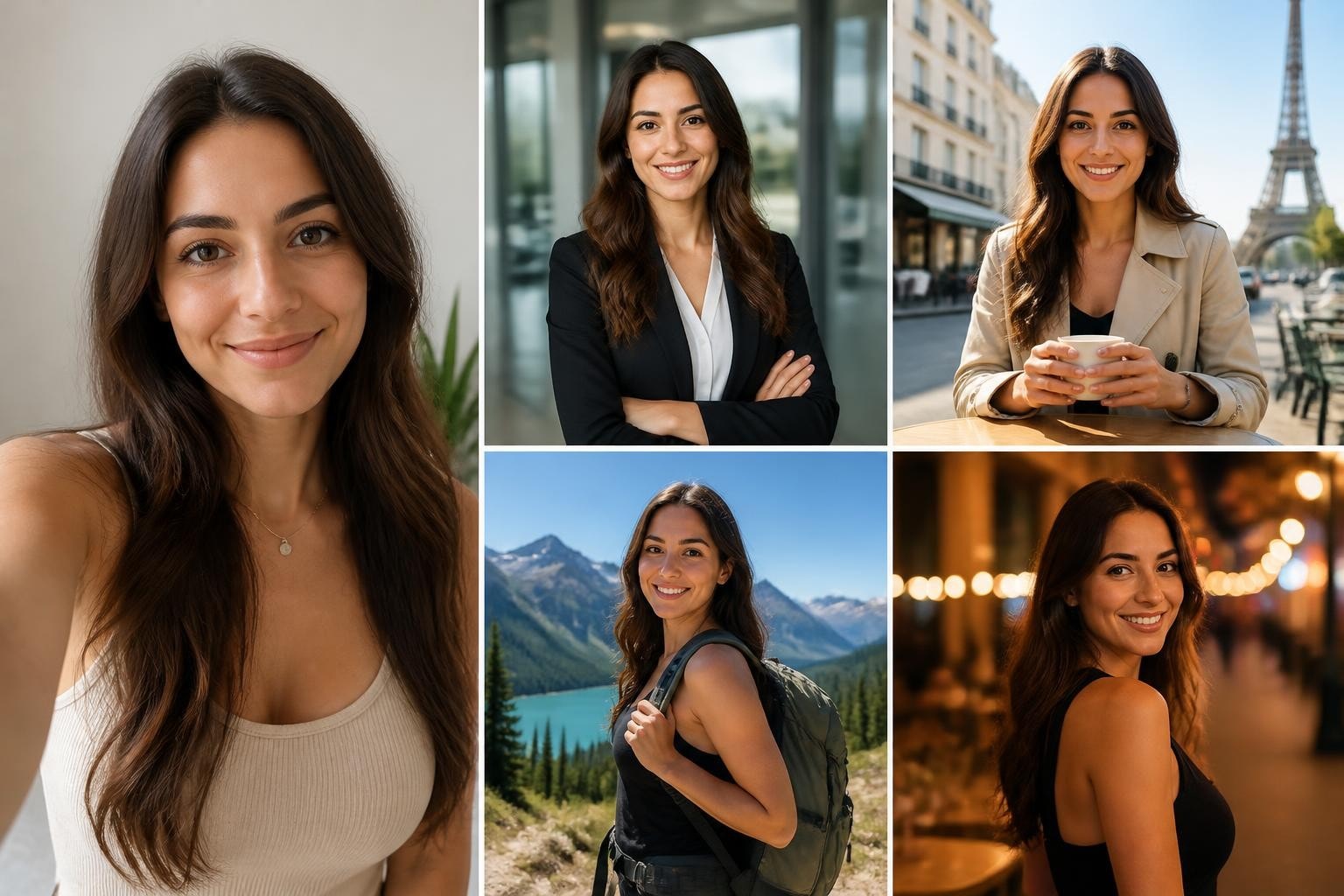
The evolution of photo generated AI has fundamentally changed how individuals and professionals approach visual content creation. Rather than scheduling expensive photoshoots or traveling to specific locations, users can now generate realistic images that place them in virtually any scene while maintaining their authentic appearance. This technology combines reference photos with AI models trained on millions of images to produce personalized visual content that serves professional, social, and creative purposes. Understanding how photo generated AI works, its applications, and quality considerations helps users make informed decisions about incorporating this technology into their workflows.
Understanding the Technical Foundation of Photo Generated AI
Photo generated AI relies on sophisticated machine learning models that learn patterns from vast datasets of photographs. These systems use diffusion models and neural networks to understand facial features, lighting conditions, backgrounds, and compositional elements that make images appear natural.
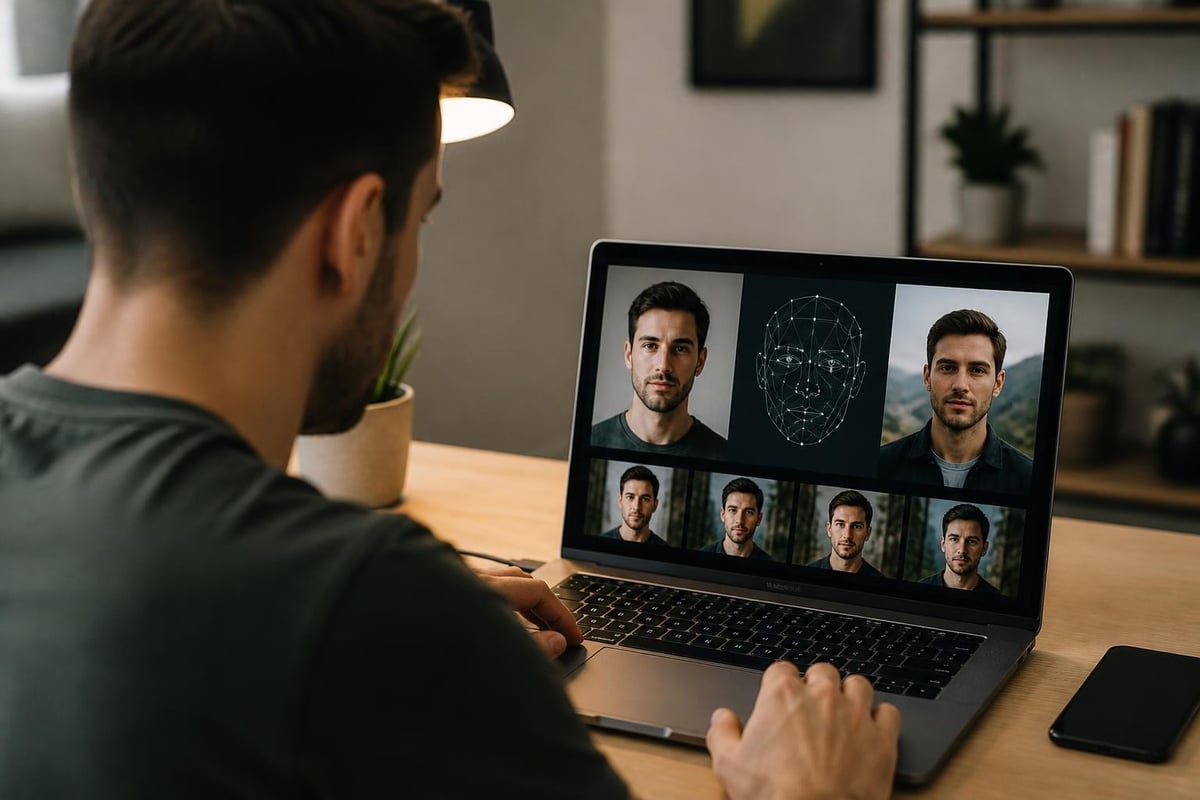
The process begins when users upload reference photos. The AI analyzes facial structure, skin tone, hair texture, and distinctive features to create a detailed understanding of the individual's appearance. This analysis forms the foundation for generating new images where the person appears in different contexts.
How Modern AI Systems Maintain Identity Consistency
Current photo generated AI platforms employ several technical approaches to preserve a person's likeness across generated images:
- Facial embedding extraction captures unique biometric patterns
- Multi-reference training uses multiple input photos to build comprehensive feature maps
- Cross-attention mechanisms ensure generated faces match source photos
- Identity preservation algorithms prevent unwanted alterations to core features
According to recent research on diffusion models for image generation, these systems have achieved remarkable improvements in maintaining consistent identity across varying poses, lighting conditions, and backgrounds. The technical challenge lies in balancing realism with identity preservation, ensuring generated images look both natural and recognizably accurate.
Training Data and Model Architecture Considerations
The quality of photo generated AI directly correlates with the diversity and ethical sourcing of training data. Leading platforms invest in datasets that represent various demographics, lighting conditions, and photographic styles. The FHIBE dataset framework provides best practices for collecting and using training data with appropriate consent and privacy safeguards.
Modern architectures typically combine:
- Base diffusion models trained on general photographic datasets
- Fine-tuned layers specialized for facial consistency
- Scene-specific modules that understand context and composition
- Quality control networks that filter unrealistic outputs
| Technical Component | Purpose | Impact on Output |
|---|---|---|
| Facial encoder | Extracts identity features | Maintains likeness accuracy |
| Scene generator | Creates background context | Determines realism of setting |
| Blending network | Integrates subject with scene | Affects natural appearance |
| Refinement layers | Polishes details | Improves final image quality |
Practical Applications Across Professional and Personal Contexts
Photo generated AI serves multiple use cases that previously required professional photography services. Understanding these applications helps users identify opportunities where this technology adds genuine value.
Professional Headshots and Business Imagery
Corporate professionals increasingly use photo generated AI to create consistent headshots across platforms. Rather than booking studio sessions or coordinating outfit changes, individuals can generate professional images that meet specific requirements.
For instance, someone preparing for LinkedIn profile updates can generate headshots with appropriate backgrounds, lighting, and attire without leaving home. The technology excels at producing clean, professional images that maintain the person's authentic appearance while meeting platform-specific formatting needs.
Business owners managing team websites benefit from visual consistency. When new employees join, generating headshots that match existing team photo styles eliminates the logistical challenge of coordinating group photography sessions.
Dating Profile Photography and Social Media Content
The dating app ecosystem presents unique challenges for photo generated AI. Users need images that feel authentic while showcasing personality and lifestyle. Generic or overly polished photos often underperform because they fail to communicate genuine character.
Quality photo generated AI addresses this by placing individuals in realistic scenarios that communicate interests and lifestyle without requiring travel or event attendance. Someone passionate about hiking can generate images on mountain trails. Another person might create café scenes or cultural venue photos that align with their actual interests.
However, authenticity remains paramount. As discussed in guidance on choosing dating profile photos that feel genuine, generated images should represent realistic scenarios the person would actually participate in, not aspirational fiction.

Content Creation for Digital Marketing
Digital marketers and content creators face constant demand for fresh visual assets. Photo generated AI enables rapid production of personalized imagery for social media posts, blog headers, and marketing materials.
A fitness coach can generate images demonstrating various workout locations. A travel blogger might create destination-themed photos during off-seasons when travel isn't feasible. Real estate agents can produce professional property visit photos without coordinating complex scheduling.
The efficiency gains prove particularly valuable for solopreneurs and small teams operating on limited budgets. Rather than allocating resources to frequent photoshoots, they redirect those funds toward other business priorities while maintaining consistent visual branding.
Those producing video content alongside static images can streamline their entire creative workflow. Services like beCreatives handle video editing, while photo generated AI produces complementary still imagery, creating an integrated visual content system.
Quality Standards and Evaluation Metrics
Not all photo generated AI produces equivalent results. Understanding quality indicators helps users select appropriate platforms and evaluate outputs critically.
Assessing Realism and Authenticity
Multiple factors determine whether generated images appear realistic:
- Lighting consistency between subject and background
- Shadow accuracy matching light source direction
- Edge blending where the person meets the environment
- Proportional accuracy in body positioning and scale
- Detail coherence in clothing, accessories, and fine features
Research on explainable evaluation metrics for conditional image synthesis demonstrates that traditional automated metrics often fail to capture perceptual quality. Human evaluation remains the gold standard, but users can apply systematic checks when reviewing generated images.
| Quality Indicator | What to Check | Red Flags |
|---|---|---|
| Facial features | Eyes, nose, mouth match reference | Distorted or merged features |
| Lighting direction | Shadows align with visible light sources | Contradictory shadow patterns |
| Background integration | Person appears naturally placed in scene | Obvious masking or halo effects |
| Detail consistency | Fine elements (hair, fabric) render cleanly | Blurred or warped textures |
Identity Preservation Versus Creative Flexibility
Photo generated AI platforms balance two competing priorities. Users want images that unquestionably look like them while simultaneously seeking variety in poses, expressions, and settings.
The best systems maintain core identity markers-facial structure, distinctive features, skin characteristics-while allowing natural variation in elements like expression, angle, and styling. Poor implementations either produce identical expressions across all outputs or introduce unwanted changes to fundamental appearance.
When evaluating platforms, test with multiple reference photos and assess whether the AI consistently recognizes and preserves your distinctive features across different generated scenes. The system should adapt pose and expression to context while keeping your face unmistakably yours.
Transparency, Ethics, and Disclosure Considerations
As photo generated AI becomes mainstream, questions about transparency and appropriate use intensify. Professional and personal users must navigate evolving norms around disclosure.
Watermarking and Provenance Tracking
Technical solutions for identifying AI-generated content continue to evolve. The NIST framework for synthetic content provenance outlines approaches including metadata standards, cryptographic watermarking, and detection algorithms.
Some platforms embed invisible watermarks that enable later verification of image origin. Others include metadata tags indicating AI generation. However, these protections remain imperfect and can be stripped through image processing.
Research into pluggable watermarking frameworks proposes model-level watermarking that persists even when images are modified. As these technologies mature, they may become standard practice for responsible photo generated AI platforms.
Disclosure Norms Across Different Contexts
Appropriate disclosure varies by context and platform. Professional headshots for business use typically don't require explicit labeling as AI-generated, provided they accurately represent the individual's actual appearance. The images serve the same functional purpose as traditional photography.
Dating profiles present more complex considerations. While there's no universal requirement to disclose AI generation, the images should accurately represent how you currently look. Generating photos that misrepresent age, body type, or current appearance crosses ethical boundaries regardless of the technology used.
Social media contexts fall somewhere between. Lifestyle content generated for personal profiles generally doesn't require disclosure if the scenes genuinely reflect activities and interests. However, professional influencers or those monetizing content may face different expectations from platforms and audiences.
The UNESCO guidelines on AI ethics and culture emphasize transparency and respect for cultural authenticity, principles that apply regardless of specific platform rules.
Selecting the Right Photo Generated AI Platform
Numerous platforms now offer photo generated AI services with varying capabilities, pricing models, and quality standards. Making an informed selection requires evaluating several key factors.
Technical Capability and Output Quality
Request sample outputs or utilize free trials to assess whether a platform's results meet your quality standards. Pay particular attention to:
- Identity consistency across multiple generated images
- Scene variety and the realism of different backgrounds
- Customization options for poses, expressions, and settings
- Output resolution and file formats provided
- Processing speed and batch generation capabilities
The best platforms allow you to select from thousands of distinct scenes while maintaining your authentic appearance. Services that offer realistic AI-generated images across 4,500+ scenes provide flexibility for diverse use cases from professional headshots to lifestyle photography.

Privacy, Security, and Data Handling
Before uploading personal photos, review platform policies regarding:
- Data retention duration and deletion procedures
- Training data usage of your uploaded photos
- Third-party access to your images or generated outputs
- Storage security and encryption standards
- Geographic data location and jurisdictional considerations
Reputable platforms clearly communicate data practices and provide mechanisms for users to control their information. Avoid services with vague privacy policies or those that claim broad rights to use uploaded photos for unspecified purposes.
Pricing Structure and Value Assessment
Photo generated AI services employ various pricing models:
| Pricing Model | How It Works | Best For |
|---|---|---|
| Per-image | Pay for each generated photo | Occasional users with specific needs |
| Credit bundles | Purchase credits redeemable for images | Moderate usage with flexibility |
| Monthly subscription | Unlimited or high-volume generation | Regular users and professionals |
| One-time packages | Single payment for set number of images | Specific projects or campaigns |
Assess your anticipated usage volume and frequency to determine which structure offers optimal value. Professional users generating content regularly typically benefit from subscription models, while individuals updating dating profile pictures periodically may prefer pay-per-use options.
Integration with Broader Content Workflows
Photo generated AI functions most effectively when integrated into comprehensive content strategies rather than used in isolation.
Combining AI Generation with Traditional Photography
The most authentic visual presence often emerges from blending photo generated AI outputs with traditional photography. Use genuine photos from actual experiences as your foundation, supplementing with AI-generated images that fill gaps or provide variety.
For instance, someone maintaining a professional online presence might use traditional photos from actual speaking engagements, conferences, and work settings while generating additional headshots and context photos that maintain visual consistency.
This hybrid approach preserves authenticity while addressing practical limitations around photo availability. You remain truthful about your appearance and activities while using technology to enhance presentation quality.
Content Calendar Planning and Asset Management
Integrate photo generated AI into content planning workflows:
- Generate seasonal imagery in advance of relevant periods
- Create themed photo sets aligned with content campaigns
- Develop backup visual assets for emergency publishing needs
- Maintain consistent personal branding across platforms
Organize generated images with clear metadata indicating creation date, intended use, and scene context. This systematic approach prevents confusion and ensures appropriate application of assets.
Professional content creators can coordinate photo generation with video production timelines, ensuring visual consistency across content formats. When your video editing partner delivers completed projects, having matching still imagery ready maximizes content coherence and professional appearance.
Technical Limitations and Current Challenges
Despite significant advances, photo generated AI faces ongoing technical and perceptual limitations that users should understand.
Artifacts, Edge Cases, and Failure Modes
Even sophisticated systems occasionally produce problematic outputs:
- Hand and finger rendering remains challenging, sometimes producing unrealistic appendages
- Complex accessories like jewelry or glasses may distort
- Extreme poses or unusual angles increase likelihood of artifacts
- Intricate backgrounds with text or fine patterns can blur or warp
- Group scenes with multiple people prove more difficult than solo images
Always review generated images carefully before use. Quality platforms provide multiple variations, allowing selection of the best outputs while discarding problematic renders.
The Uncanny Valley and Perceptual Authenticity
Some photo generated AI outputs appear technically correct yet feel subtly wrong to human observers. This "uncanny valley" effect occurs when images contain minor inconsistencies in lighting, texture, or proportion that don't align with natural photography.
Overcoming this requires attention to contextual details. An image might show you in a coffee shop, but if the coffee cup lacks proper reflections or the background customers display odd proportions, viewers perceive something as "off" even without identifying specific flaws.
Selecting platforms that prioritize making AI photos look authentically real rather than merely technically accurate helps avoid these perceptual issues. The best systems understand that realism extends beyond pixel-perfect rendering to encompass natural composition, appropriate context, and believable scenarios.
Ongoing Research and Future Developments
Current academic research addresses many existing limitations. Recent surveys of text-to-image generation approaches identify key challenges including controllability, consistency, and evaluation methods. As researchers develop solutions, commercial platforms gradually incorporate improvements.
Emerging techniques focus on:
- Fine-grained control over specific image elements
- Multi-image consistency for generating coherent series
- Physical plausibility ensuring generated scenes obey natural laws
- Temporal coherence for video generation applications
- Reduced computational requirements enabling faster processing
These advances will expand what photo generated AI can accomplish while reducing costs and improving accessibility for individual users.
Copyright, Ownership, and Legal Considerations
The legal landscape surrounding photo generated AI continues evolving as courts and legislators grapple with novel questions.
Training Data Copyright and Fair Use
Significant legal uncertainty surrounds whether training AI models on copyrighted photographs constitutes fair use or infringement. A comprehensive analysis of generative AI and EU copyright law examines competing arguments and potential regulatory approaches.
For users, this creates practical considerations around platform selection. Services that transparently document training data sources and obtain appropriate licenses demonstrate greater legal sustainability than those using scraped datasets of uncertain provenance.
Ownership of Generated Outputs
Most photo generated AI platforms grant users ownership or broad usage rights to images created with their service. However, specific terms vary significantly:
- Some platforms retain shared rights to use generated images for promotional purposes
- Others grant exclusive ownership to the user
- Certain services impose restrictions on commercial use or distribution
- Enterprise plans may include different licensing terms than individual subscriptions
Review licensing agreements carefully, particularly if you intend commercial use of generated images. Ensure the platform's terms align with your intended applications.
Model Rights and Publicity Concerns
When you use photo generated AI with your own reference photos, you're creating images of yourself, which generally doesn't raise publicity rights issues. However, attempting to generate images that depict other individuals without their consent could create legal exposure.
Platforms typically prohibit generating images of public figures or other people without authorization. These restrictions protect both users and platforms from potential legal liability while promoting ethical use of the technology.
Photo generated AI has matured into a practical tool for creating realistic, personalized imagery across professional and personal contexts. By understanding the technical foundations, evaluating quality standards, and applying appropriate disclosure practices, users can leverage this technology effectively while maintaining authenticity. Whether you need professional headshots, lifestyle content for social media, or varied photography for dating profiles, CMeIn offers an accessible platform that transforms your reference photos into realistic AI-generated images across thousands of scenes while preserving your true likeness without unwanted alterations or retouching.