How to Make a Picture of Me: AI Photo Generation Guide

The request to "make a picture of me" has transformed dramatically over the past few years. What once meant hiring a photographer or taking another selfie now encompasses AI-generated imagery that places you in scenes you've never visited, wearing clothes you don't own, in lighting conditions you've never experienced. This technology addresses a practical problem: most people need quality photos for specific purposes but lack the time, budget, or circumstances to create them through traditional photography. Understanding how to make a picture of me using AI technology requires knowing what these tools can deliver, where they excel, and how to evaluate whether the results truly represent you.
What It Means to Make a Picture of Me in 2026
When someone asks a service to make a picture of me, they're typically requesting one of several outcomes. The most common need is placing their likeness in a different context while maintaining facial accuracy and natural appearance.
Current AI photo generation focuses on three core capabilities:
- Preserving your distinctive facial features across different scenes
- Maintaining realistic lighting, shadows, and proportions
- Creating images that pass casual viewer scrutiny without looking artificially generated
The technology behind these services relies on score-based diffusion models that have been trained on millions of images. These models learn the statistical patterns of how faces appear under different conditions, allowing them to generate new images that maintain your likeness while changing the surrounding context.
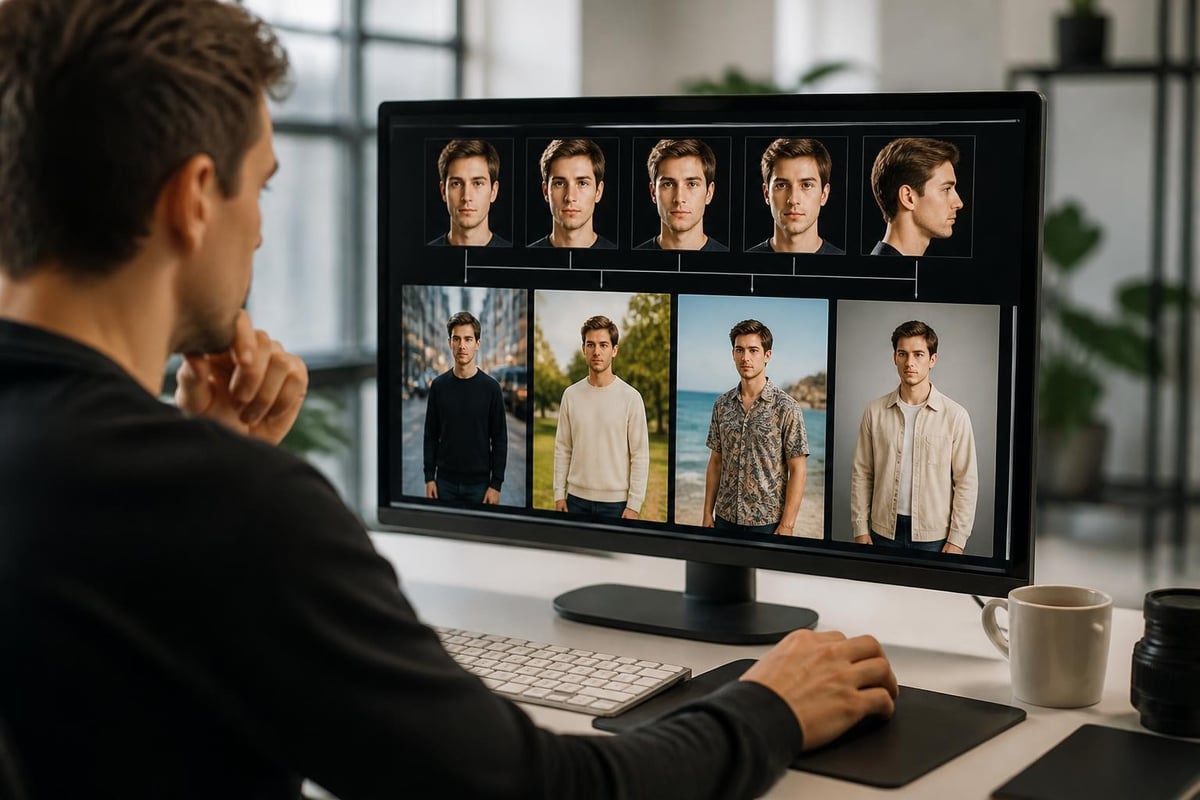
Unlike simple filters or overlays, modern AI generation rebuilds the entire image. When you request a service to make a picture of me, the system analyzes your reference photos to understand your facial geometry, skin texture, and distinctive characteristics, then reconstructs those features in the new context.
The Technical Foundation
Most contemporary services use a multi-stage process. First, they create a personalized model based on your reference images. This training phase-which can take anywhere from minutes to hours depending on the service-builds a mathematical representation of your appearance.
The generation phase then combines this personalized model with scene parameters: background, lighting direction, pose, and environmental context. The system doesn't simply paste your face onto a template; it regenerates how you would appear if photographed in that specific situation.
| Generation Stage | What Happens | Time Required |
|---|---|---|
| Reference Analysis | System learns your facial features, proportions, and characteristics | 5-30 minutes |
| Model Training | Creates personalized representation of your appearance | 10-60 minutes |
| Scene Generation | Builds complete image with you in new context | 30 seconds - 2 minutes |
| Quality Review | Validates facial accuracy and realism | Instant |
When to Use AI to Make a Picture of Me
Certain situations benefit particularly well from AI-generated photos. The technology excels when you need images for specific contexts but lack appropriate existing photos.
Professional headshots represent the most straightforward use case. If you need a clean, well-lit headshot for LinkedIn but your current photos show you at concerts, beaches, or family gatherings, AI generation offers a practical solution. Services like CMeIn's AI headshot generator can create professional images that maintain your actual appearance without the artificial polish that makes viewers skeptical.
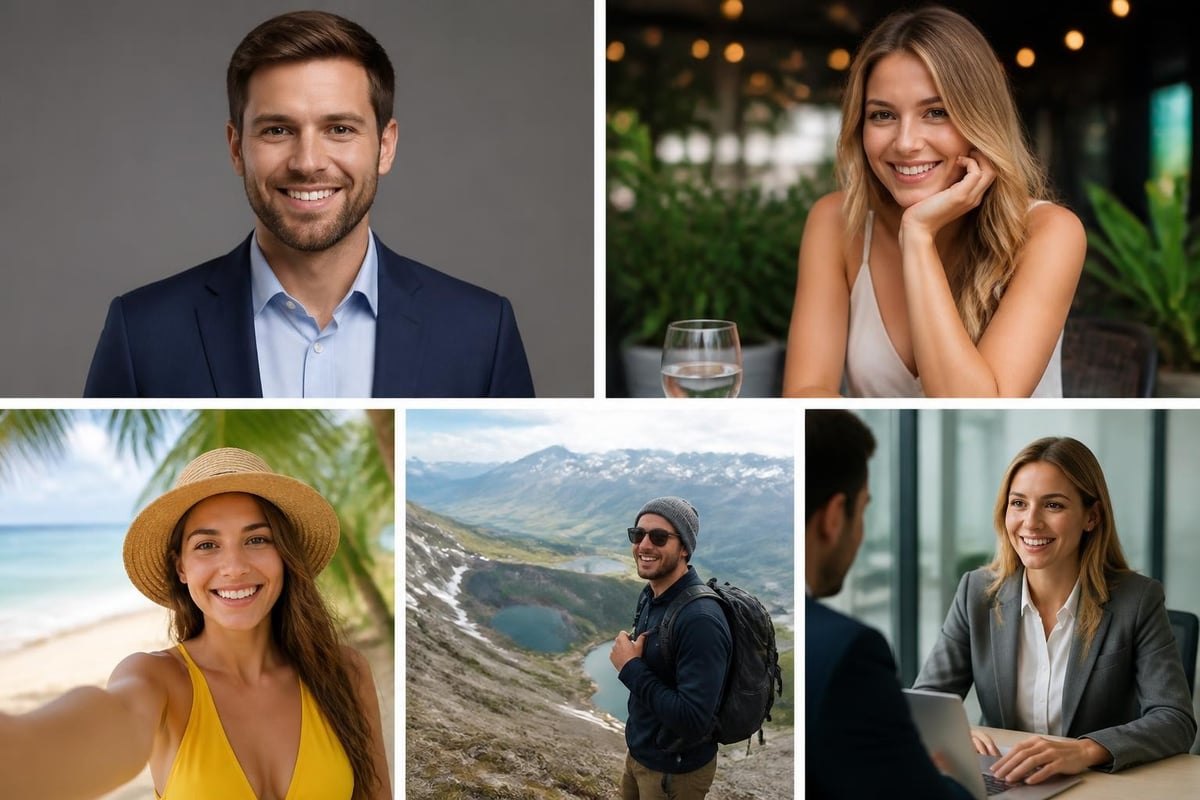
Dating profiles present another compelling application. Many people struggle to assemble 4-6 photos that show them in varied, flattering contexts. The request to make a picture of me in this scenario typically means: "I need photos that show me in social situations, interesting locations, or engaging activities-scenes that demonstrate personality without requiring I actually travel or hire a photographer."
The technology also serves practical needs like AI dating photos where authenticity matters more than perfection. The goal isn't to look like someone else; it's to show yourself in contexts that communicate who you are when existing photos don't capture that effectively.
Limitations and Appropriate Expectations
AI generation works best for standard photographic scenarios: well-lit portraits, common social situations, recognizable locations. It struggles with unusual angles, extreme lighting, or scenarios requiring precise hand positioning or interaction with specific objects.
When you ask a service to make a picture of me, expect:
- Accurate facial features and overall appearance
- Natural-looking context and environment
- Realistic (not retouched or idealized) representation
- Occasional minor imperfections that actually enhance believability
Don't expect the system to make you taller, thinner, or fundamentally different. Quality services preserve your actual appearance because that's what performs best in real-world use. How to make AI photos look real provides detailed guidance on evaluating realism in generated images.
Choosing Quality Reference Photos
The instruction to make a picture of me produces results only as good as the reference images provided. Most services require 8-15 photos showing you from different angles, in varied lighting, with different expressions.
Your reference set should include:
- At least three photos showing your face from the front
- Two or more profile or three-quarter views
- Different lighting conditions (indoor, outdoor, natural, artificial)
- Varied expressions (neutral, smiling, serious)
- Recent photos (within the past 6-12 months)
Avoid heavily filtered images, photos where you're wearing sunglasses, or shots with extreme shadows across your face. The system needs clear information about your actual appearance to make a picture of me that looks authentic.
One common mistake is providing only selfies. While selfies work as part of your reference set, including photos taken by others from a normal viewing distance gives the AI better information about your proportions and how you appear in natural contexts.
Evaluating Results for Authenticity
When you receive AI-generated images after requesting a service to make a picture of me, systematic evaluation ensures the results meet your needs.
Check these specific elements:
- Facial symmetry and proportions: Do your eyes, nose, and mouth maintain their relative positions and sizes?
- Skin texture: Does your skin look like your actual skin, including any distinctive characteristics?
- Hair: Is the color, texture, and general style accurate to your current appearance?
- Overall impression: If a friend saw this photo, would they recognize you without hesitation?
The Brookings Institution's principles for generative AI emphasize transparency and authentic representation, particularly relevant when generating personal imagery for professional or social purposes.
Quality services maintain your likeness without introducing the artificial perfection that makes viewers suspicious. Minor asymmetries, natural skin texture, and realistic lighting all contribute to believability. When you make a picture of me using AI, the goal is "this is clearly me in a different context," not "this is an idealized version of me."
Red Flags in Generated Images
| Issue | What It Indicates | Action |
|---|---|---|
| Overly smooth skin | Heavy artificial retouching | Reject; request natural texture |
| Changed facial proportions | Poor model training | Provide better reference photos |
| Inconsistent lighting on face vs. background | Generation artifact | Request regeneration |
| Blurred or distorted features | Technical failure | Discard; try different parameters |
Privacy and Ethical Considerations
Uploading personal photos to make a picture of me raises legitimate privacy questions. Research on privacy-preserving face generation demonstrates that protecting biometric data during AI generation requires specific technical safeguards.
Before using any service, understand:
- How your reference photos are stored and for how long
- Whether your images train broader models or remain isolated
- What rights you retain to generated images
- How the service prevents unauthorized use of your likeness
Reputable services clearly disclose their data handling practices. CMeIn's approach focuses on maintaining your likeness authentically, which requires secure handling of your reference images throughout the generation process.
The European Commission's AI Act guidance establishes regulatory frameworks for biometric processing, particularly relevant if you're generating images for use across European markets or platforms.
Disclosure and Transparency
When using AI-generated images on dating profiles or professional platforms, disclosure practices vary by context. Some platforms explicitly require labeling AI-generated images; others leave it to user discretion.
The Coalition for Content Provenance and Authenticity's implementation guide provides technical standards for attaching metadata that indicates AI generation, allowing platforms and viewers to verify image provenance without invasive watermarks.
For most practical purposes, generated photos that accurately represent your current appearance don't require disclaimer tags any more than professionally edited photos do. The ethical line is authenticity: does this image truthfully represent how you look, or does it misrepresent your appearance?
Comparing AI Generation to Traditional Photography
The decision to make a picture of me using AI versus hiring a photographer depends on your specific needs and constraints.
AI generation offers advantages when you need:
- Multiple images in varied contexts without travel or location access
- Quick turnaround (hours rather than weeks)
- Lower cost per image ($2-5 versus $150-500 for professional sessions)
- Consistency across many images while varying contexts
Traditional photography remains superior when you need:
- Documentation of actual experiences or events
- Complex interactions with specific environments or people
- Legal requirements for unaltered images (passport photos, certain professional credentials)
- Original images without generative AI involvement
Many people use both approaches strategically. Professional photos of actual experiences anchor their profile or portfolio, while AI-generated images fill gaps where they lack appropriate contextual photos.
Specific Use Cases and Best Practices
Different applications require different approaches when you make a picture of me through AI generation.
Dating Profiles
Choosing dating profile photos that feel authentic while showing you in engaging contexts represents the most common use case. The challenge is assembling 4-6 images that communicate personality, lifestyle, and appearance without manufacturing a false impression.
AI generation excels at placing you in social situations-coffee shops, outdoor activities, cultural venues-that suggest how you spend time without requiring documentary evidence of every hobby. Understanding what photos suit you helps determine which contexts align with your actual personality and dating goals.
For women specifically, Tinder photo ideas that maintain authenticity while showing varied facets of personality often benefit from a mix of real and generated images, with AI filling gaps in available photos.
Professional Contexts
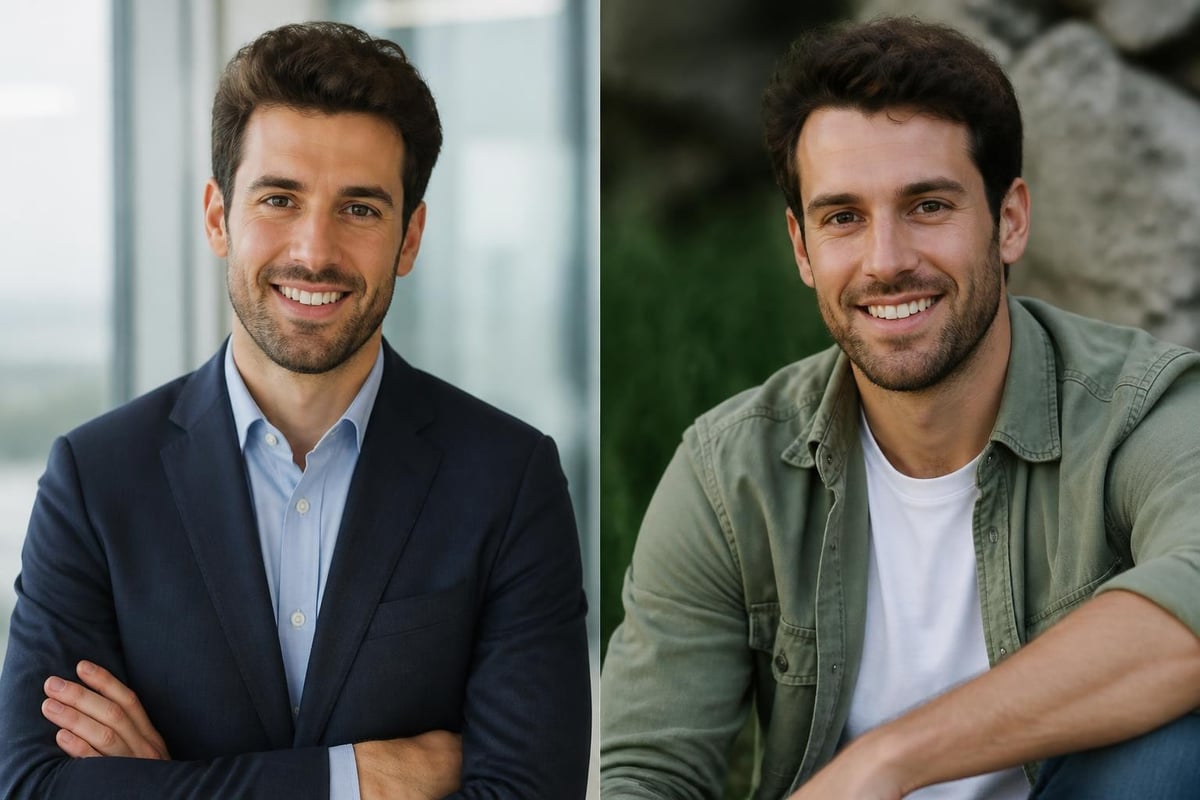
When you need to make a picture of me for LinkedIn or business purposes, the stakes around accuracy increase. Professional contexts require photos that colleagues or clients would recognize as you if they met you in person.
AI LinkedIn photos: how to choose a headshot that still looks like you provides specific guidance for maintaining professional credibility while using generated images. The key principle: your photo should pass the lobby test-when you arrive for a meeting, people should recognize you immediately from your profile photo.
Understanding when and how to refine images becomes particularly relevant for professional use. Services that focus on maintaining your actual appearance rather than idealizing it produce results that perform better in real-world professional situations.
Technical Quality Indicators
Not all services that make a picture of me deliver equivalent results. Technical quality varies significantly across providers.
High-quality generation demonstrates:
- Consistent lighting across face and environment
- Natural shadows that match the supposed light source
- Appropriate depth of field for the scene type
- Skin texture that matches your reference photos
- No visible artifacts around hairline or face edges
Research on deepfake generation and detection identifies common technical failures in synthetic faces, including unnatural eye reflections, inconsistent skin texture, and improper light scattering. While AI photo generation for personal use differs from deepfake creation, the same quality indicators apply.
Services that specialize in realistic generation rather than idealization typically produce more technically sound images. When evaluation makes you question whether this looks like you, the answer is usually no-trust your instinct and request different parameters or choose a different service.
Cost and Value Analysis
Pricing for services that make a picture of me ranges from free (with significant limitations) to several hundred dollars for premium packages.
Typical pricing tiers include:
- Free tiers: 1-3 images with watermarks or low resolution; useful for testing but rarely suitable for actual use
- Basic packages ($15-30): 20-50 images with standard contexts and quality; appropriate for most dating or social media needs
- Professional packages ($50-100): 100+ images with premium quality, varied contexts, and often include specialized outputs like headshots
- Custom services ($150+): Specific scenarios, extensive variation, or specialized requirements
Compare this to traditional photography sessions costing $150-500 for 1-2 hours and 10-20 edited photos in a single location. The value proposition of AI generation becomes clear when you need diverse imagery across multiple contexts.
CMeIn's pricing structures reflect the reality that most users need varied, authentic images rather than dozens of variations of the same pose. Quality matters more than quantity when the goal is authentic representation.
Common Problems and Solutions
When you make a picture of me using AI, several predictable issues may arise.
"The photos don't look quite like me": Usually indicates insufficient or poor-quality reference photos. Solution: Provide more varied reference images, particularly different angles and lighting conditions.
"The photos look artificial": Often results from services that over-smooth or idealize. Solution: Choose services that prioritize realism over perfection; minor imperfections enhance believability.
"The context looks wrong for my personality": Mismatch between generated scenes and your actual lifestyle. Solution: Select contexts that align with how you actually spend time, not aspirational scenarios that feel inauthentic.
"Photos perform poorly on dating apps": Despite technical quality, generated images underperform. Solution: Mix AI-generated images with real photos; ensure at least 1-2 images show you in documented real situations.
If you're experiencing why am I not getting matches on Hinge, the issue may relate to photo selection strategy rather than individual image quality.
Integration with Photo Editing Tools
AI generation represents one tool in a broader photo workflow. Many users combine generated images with editing capabilities to optimize results.
Services offering pose maxing allow you to adjust positioning within existing photos, complementing generation by refining images you already have. Similarly, background removal or image resizing help prepare reference photos or optimize generated outputs for specific platforms.
The workflow typically progresses: select best reference photos → generate images in needed contexts → edit for platform requirements → evaluate performance → iterate based on results.
Understanding your best angle and better side helps you provide better reference photos and choose more flattering generated results, creating a feedback loop that improves outcomes.
Future Developments and Trends
The technology enabling services to make a picture of me continues advancing rapidly. Current development focuses on three areas: improved facial consistency across varied poses, better handling of complex scenes with multiple people, and enhanced preservation of subtle personal characteristics.
By late 2026 and into 2027, expect systems that can generate short video clips maintaining your likeness, opening new use cases for animated profiles or video introductions. Privacy protections will likely strengthen as regulations mature and technical standards like C2PA content credentials see broader adoption.
The fundamental value proposition-realistic images of you in contexts you need without requiring extensive photoshoots-will remain constant. How that value is delivered will become faster, more accurate, and more accessible.
Practical Implementation Strategy
If you decide to make a picture of me using AI generation, follow this systematic approach:
- Audit your current photos: Identify gaps in contexts, situations, or styles you need
- Collect quality reference images: Gather 10-15 recent, clear photos showing varied angles and lighting
- Choose appropriate service: Select based on your primary use case (professional, dating, social media)
- Generate initial batch: Create 20-30 images across different contexts
- Evaluate ruthlessly: Keep only images that truly look like you; discard anything questionable
- Test in real contexts: Use selected images on actual platforms; monitor performance
- Iterate based on results: Refine context selection and generation parameters based on what performs well
Most people discover that 4-6 truly authentic generated images mixed with 2-3 real photos outperform larger collections of questionable quality. Quality and authenticity matter more than volume.
Making a picture of yourself using AI technology has become both more accessible and more sophisticated in 2026. The key to successful implementation lies in choosing services that prioritize maintaining your actual appearance rather than creating an idealized version, and in understanding which contexts genuinely represent your personality and lifestyle. CMeIn specializes in generating realistic AI photos that preserve your likeness across diverse scenes-from dating profiles to professional headshots-ensuring the images you use truly represent who you are without artificial retouching or idealization.